As the MONUSCO announces a Security Zone around Goma (but not as far as the FARDC/M23 front lines) to be enforced after 16h tomorrow evening (by force if necessary), life still continues in Goma against the constant backdrop of war and violence...
Having fried potatoes, a lady prepares a feast of goat on Sunday...
Prices in Virunga Market in Goma have increased slightly due to the recent clashes on the main road between Goma and Rutshuru where many agricultural products are grown to be sold in the Provincial Capital. Although traffic has been passing along the road through no-man's land and across both FARDC and M23 borders for the last four or five days, the week while the road was impassable drove prices up a little.
A group of residents of Kanyarucina took advantage of a lull in fighting last Tuesday to harvest crops from their fields. They told me they had not had access while the M23 held the town. The crops were not ripe but because they weren't sure when they might get another chance, they picked what they could to sell or eat...

Cooking on a Sunday is a family activity. To season the goat, one of the lady's sisters crushes garlic...

And her daughter revises last year's lessons while humming the school "recruitment" ditty in excitement at the prospect of a new school year in September...

This studious little girl goes to a private school in Goma that charges tuition fees. The school song is intended to attract new pupils (and their parents) and boasts of the achievements and happiness of the children studying there. The quality of the education received at her school is good - in the two years that she has been studying there, she has learned her times-tables, picked up the basics of French and been introduced to Congolese geography and history. Not all children in DRC have the means to access private education.
However, nearly all children's families pay for education in some form or another.
The DRC is signatory to the International Convention on the Rights of the Child and article 28 of the convention guarantees the right to universal, free primary education. Further, primary education is compulsory and free in public schools according to article 43 of the May 2005 DRC constitution. In 2010 the government launched an initiative to phase in free primary schooling. Starting with the first three years of primary school and intended to increase a year later to cover the final three years - to age 12 -, the initiative gained international support.
Despite the budget for education doubling over the last two years - 13.8% of the total national budget is allocated to education in 2013 - the general government funding gap for the sector is still enormous. As a result, teachers' salaries are commonly "topped up" by parents. This occurs frequently through charges levied on releasing school reports or exam marks, or through teachers maintaining a monopoly on selling school syllabuses that each child needs to follow the course. Sometimes, a parents' committee fund is levied to cover teachers' salaries. So also in public schools families must pay for their kids' primary education.
Of course, this is only one side of the picture. Talking to families, teachers can often be painted as the villains - extorting fees, singling out and suspending children whose families have not paid. There are obviously more sensitive ways to go about raising fees from parents than pulling their primary-school-aged kids up in front of the class for public humiliation and banishment from the classroom until the debts are paid, however, teachers too must live.
The World Bank donated $20m in March 2011 to support teachers' salaries. Unfortunately, the project information on the World Bank website is incomplete - "A Results Framework for this project is currently not available" - and so it is not possible to calculate from these data the total annual dollar amount necessary to pay public school teachers across DRC.
According to the Brookings Institution (here), based on a 2012 paper "there are between 350,000 and 450,000 teachers, with just over half of these teaching at primary level". The World Bank puts the figure at a worryingly precise 296,544 primary school teachers across DRC. Given that the average salary for a primary school teacher is between $35 - $40 a month, the World Bank support should have covered two years' salary as the total dollar amount needed annually (based on WB estimates) is somewhere between $10,379,390 - $11,862,160. That didn't happen - some teachers went unpaid for long periods in 2011 and 2012 which led to teachers' strikes. Maybe the money was intended for other things as well- no report on the WB website, so I can't tell...
Anyway, there's a little rant about education in the DRC... got a bit carried away.
Some 10 km away from the studious girl and her family feast, yesterday, an FARDC commando stands ready having cleaned his rifle...

While his colleague loads his ammunition belt...

And near to the UN base in Munigi, a third FARDC soldier leans on his tank...

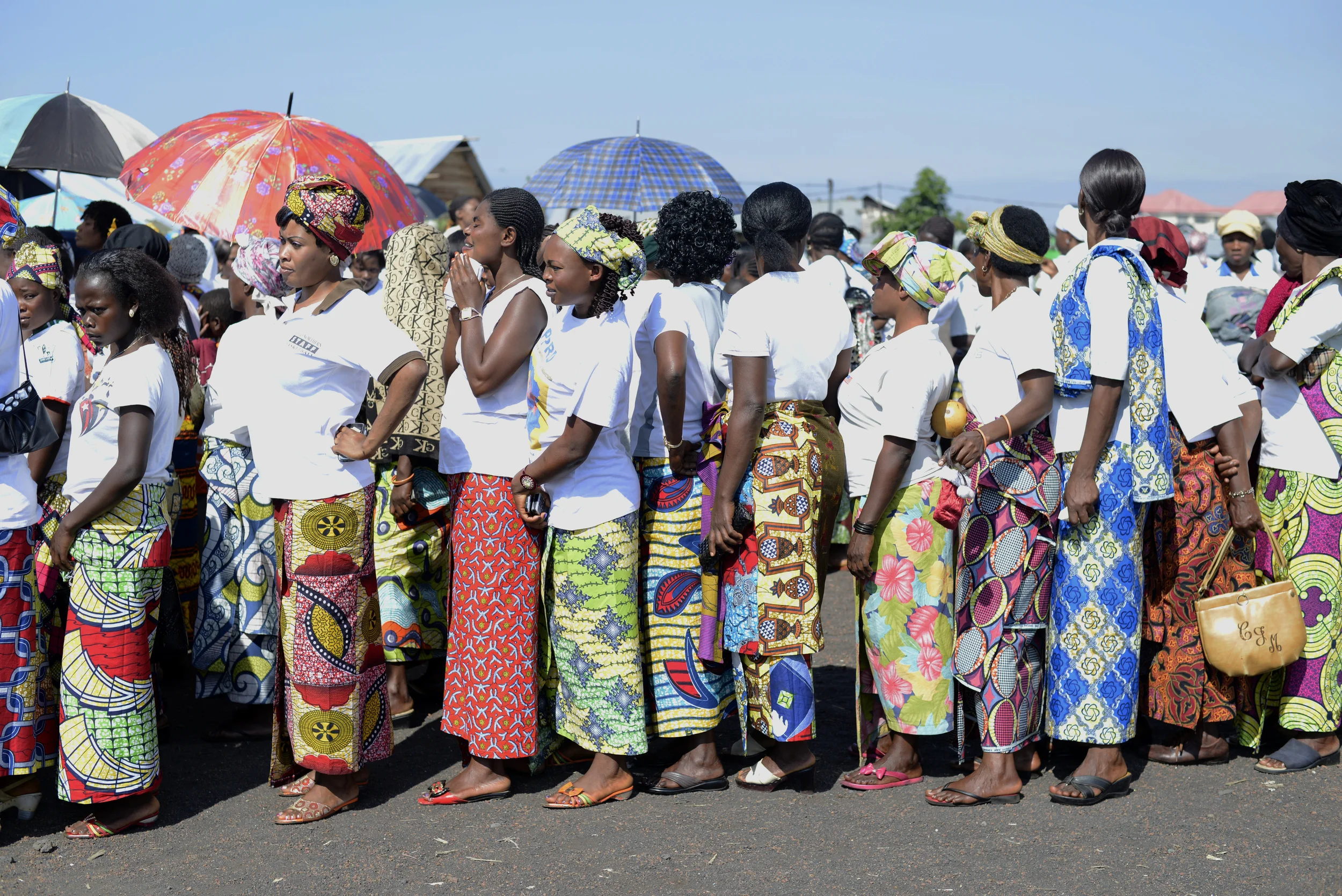
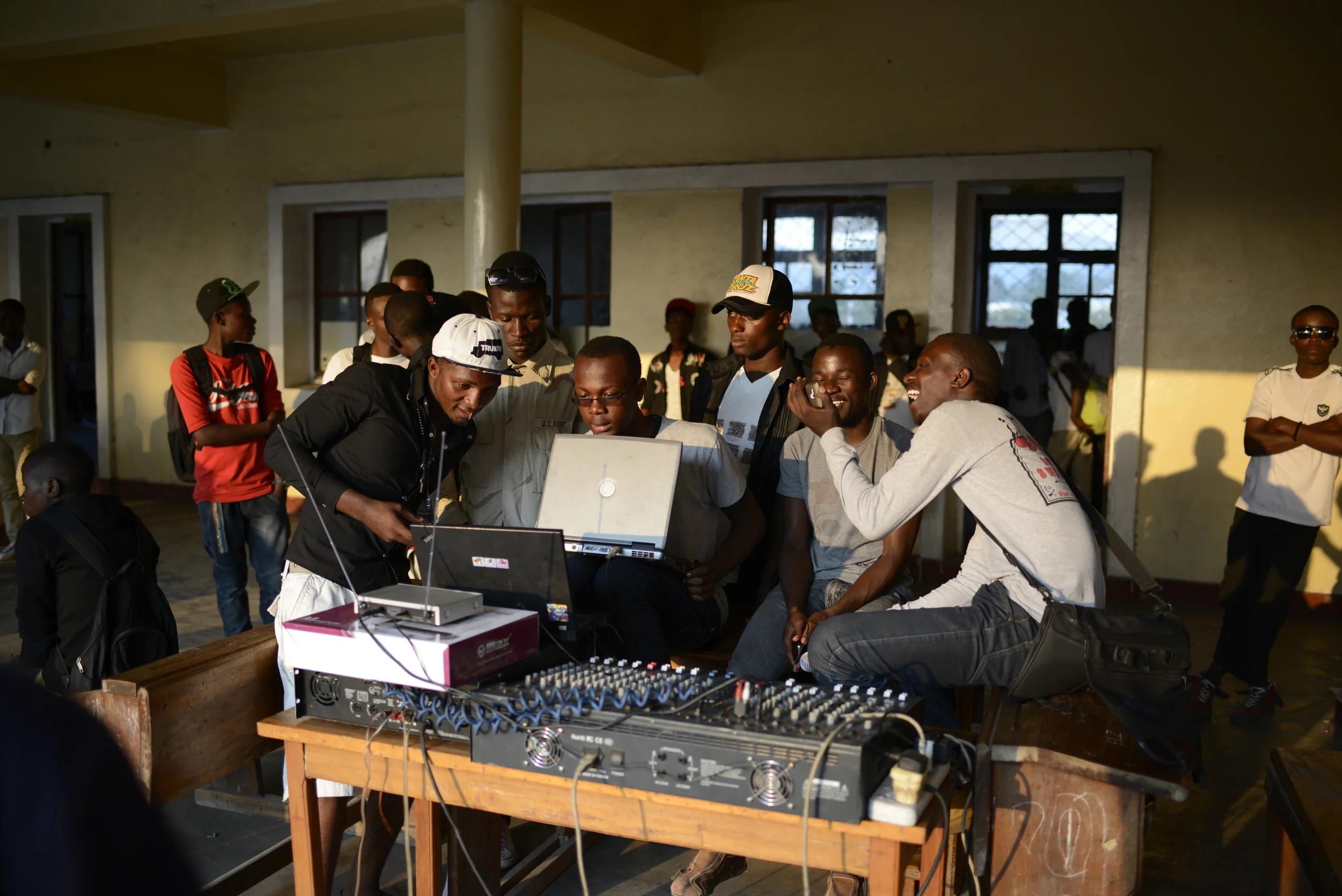
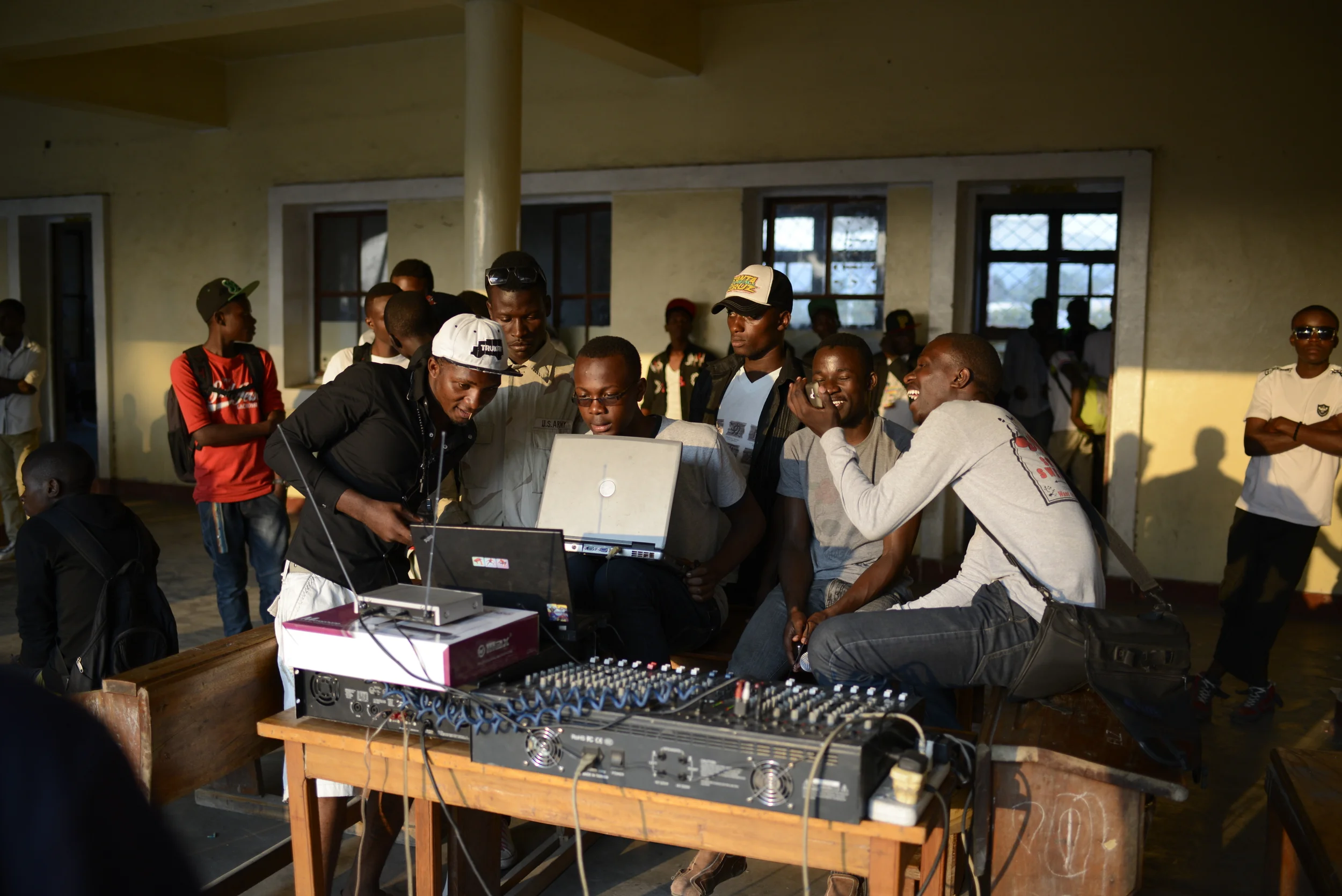
 A couple of months ago, I was invited to a day of performances at the Insitut de Goma. Here are a couple of photos. They are straight off the camera and I might replace them with edited versions if I sort out Photoshop...


