
Catching Kinshasa
Under nearby trees, small crowds bristle in an esoteric, Kinshasa kind of way. Excitement has a nonchalance of its own here. Escaping the sun, parched mouths treat themselves to gulps of warm, fizzy beer and bubbling sugary soft-drinks. Casual quips still pass between sprawling groups; but heat stifles vigorous debate. And, of course, energy must be conserved for the spectacle.
Largely ignored, half-filled, off-white kimonos bag floppily around the dusty parade ground as parents’ bottled-up effervescence feigns laziness and sloth. No adult means to belittle the children’s Judo or Karate events. Some family and playmates cheer and crowd: forming a makeshift ring-space between them. People’s minds are elsewhere. The young gladiators display dignity, decorum, and skill. But today does not belong to them. As often, adults’ fun trumps theirs.
But fun is not entirely the right word. Catch is a very serious thing and this is a big competition.
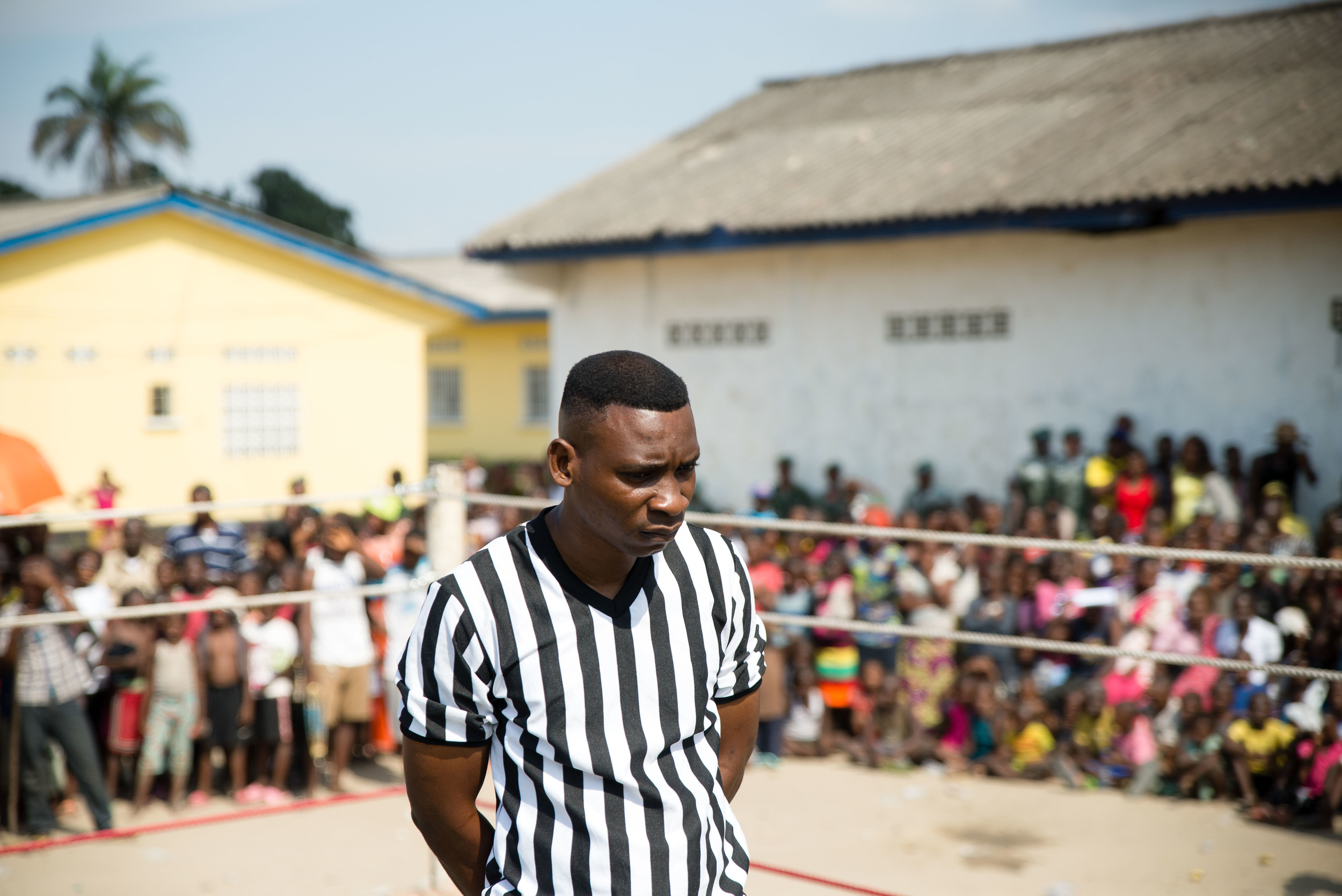
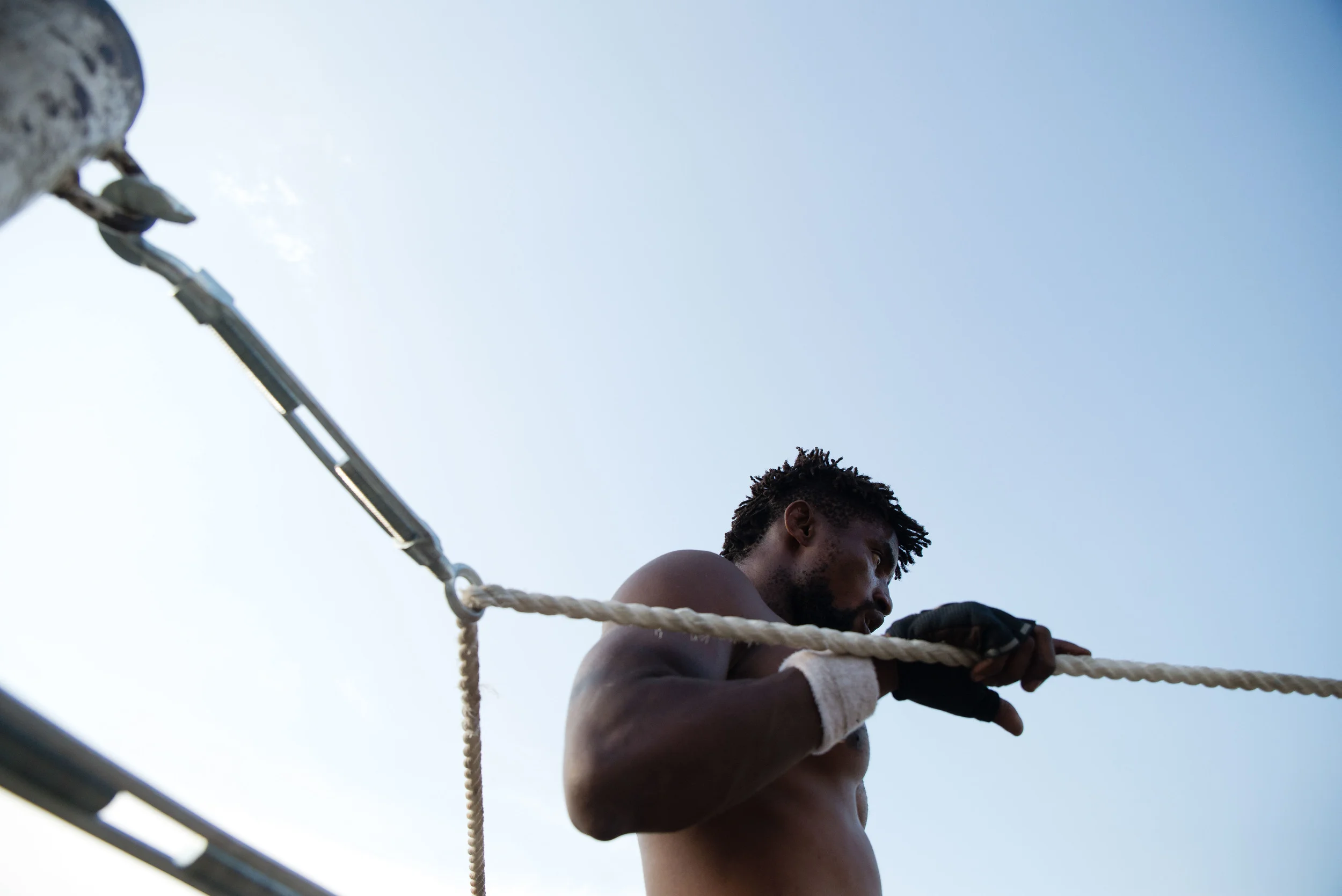
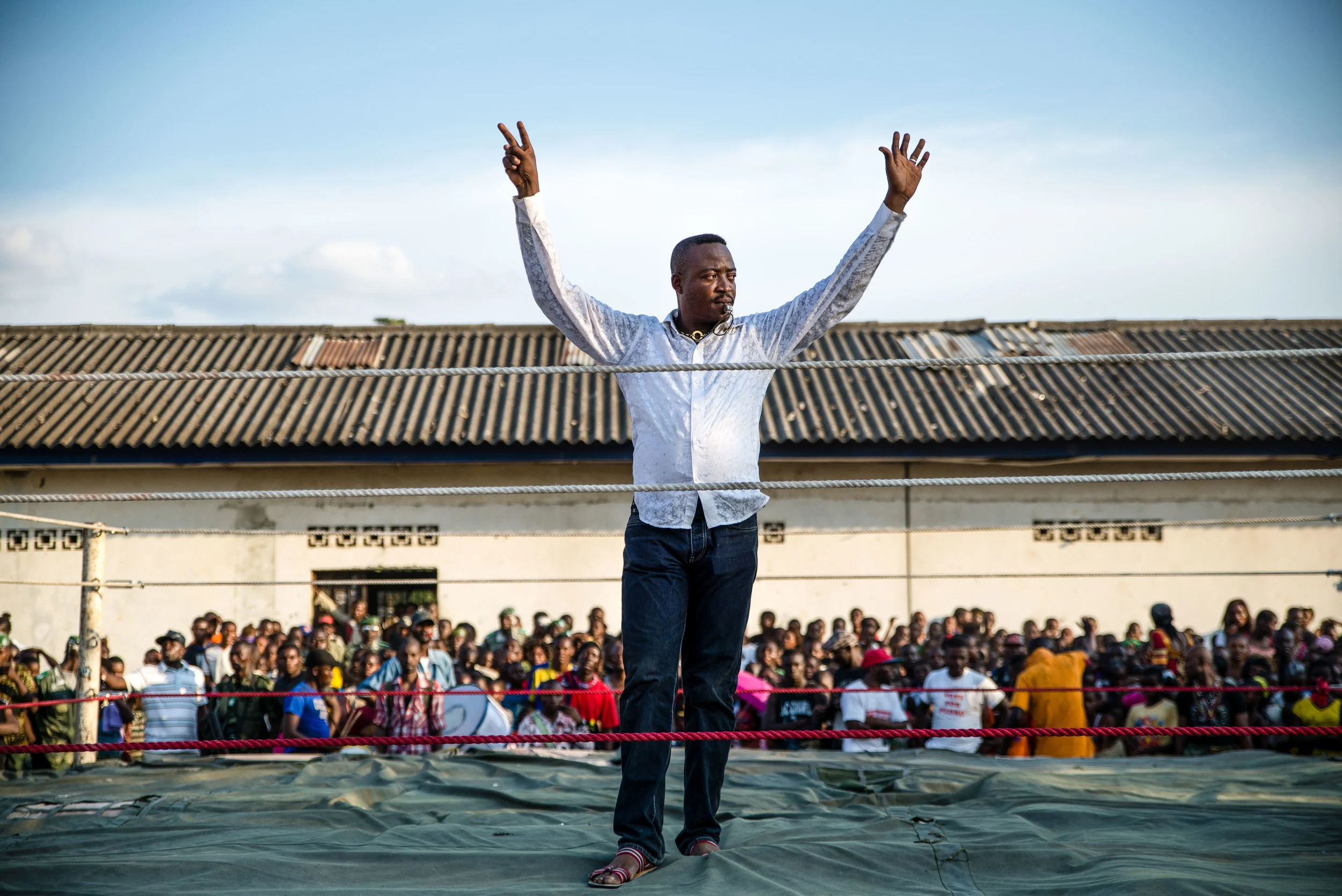
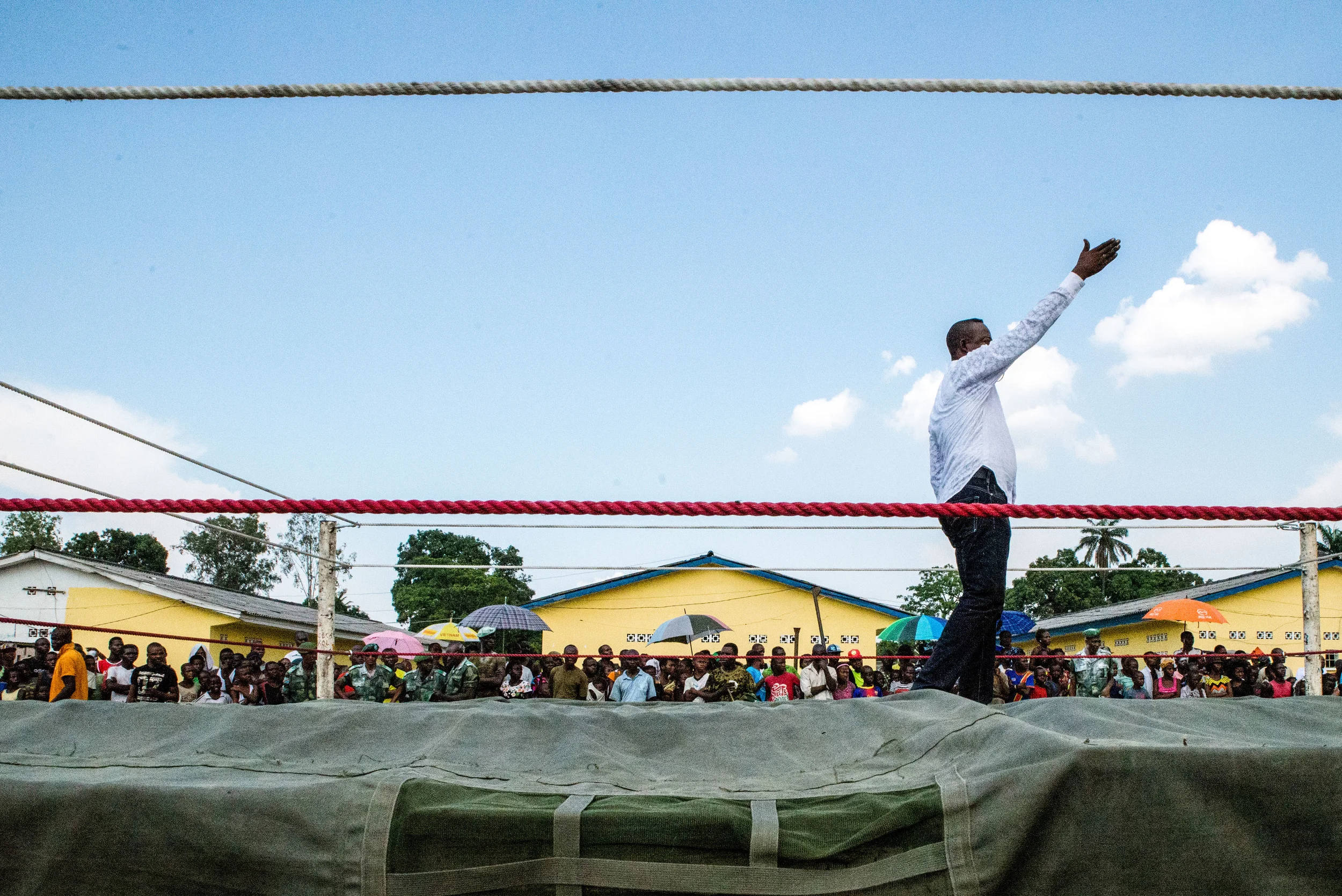
The referee worriedly paces the arena. He knows what forces are at play. The crowd swells around the makeshift ring with sagging guard rails, sweat beginning to flow while trumpeter and drums sway. Across the square, junior-ranks - trim, casually-uniformed - glisten to prepare breezy plastic marquees for smartly-dressed top brass. Dusty-white smiling faces congratulate friends; an atmosphere of excitement and fulfilled celebration. Graduans celebrate passing out by covering each others’ heads with talcum and the humid heat wafts sweet smelling powder.
The ring is set. To coincide with a passing out ceremony in Kinshasa’s military camp “Kokolo”, the National Army is about to take on the National Police force. The referee has calmed his nerves and stands to one side with his colleague as an older generation of gladiators commands the attention of the gathering.
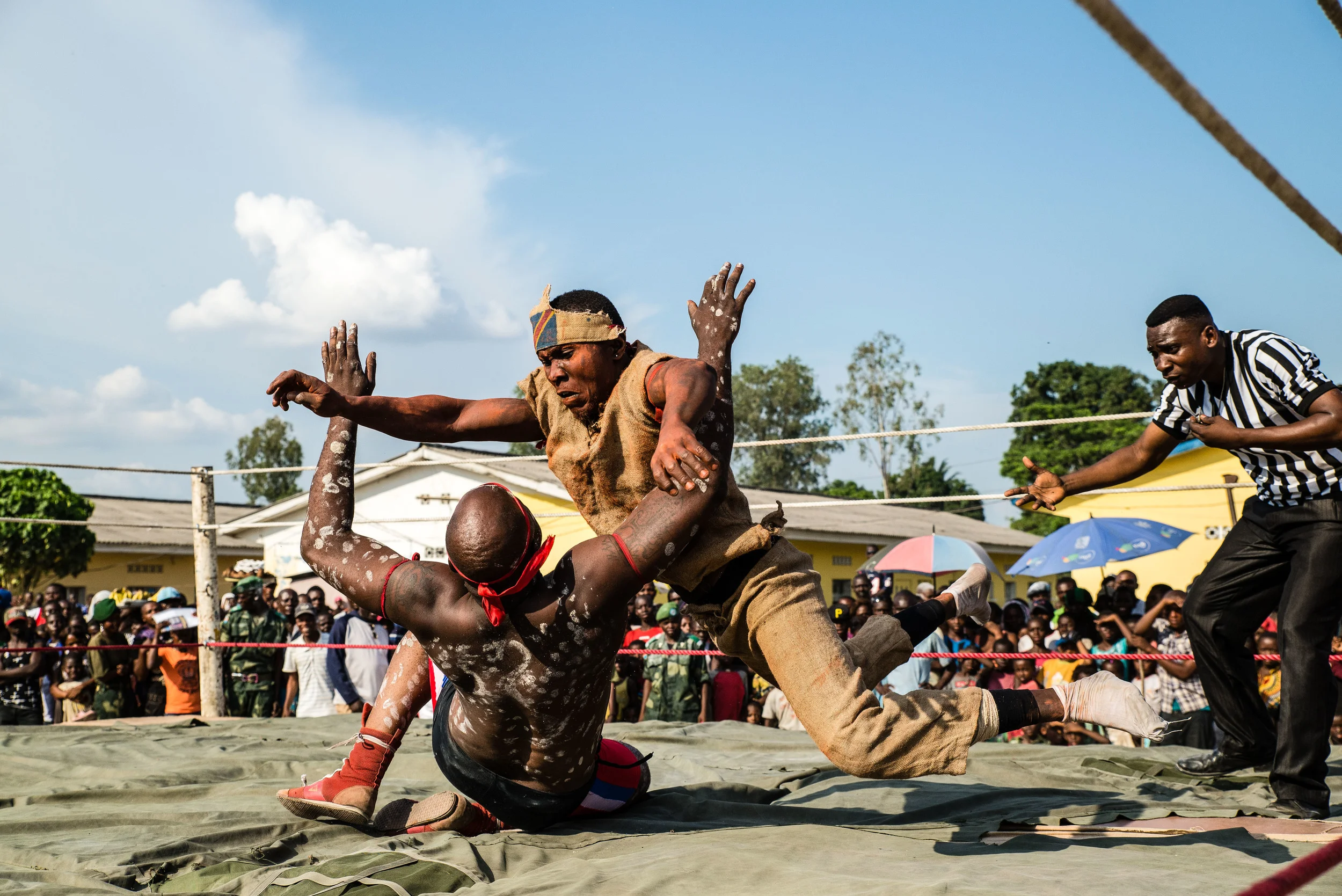
“I concentrate on technique - I don’t go in for all these fetishes,” Wingi - a smily, broad-shouldered wrestler in his twenties declared a few days earlier. Not all fighting must play with witchcraft. Certainly, the kids’ judo and karate matches didn’t involve theatrics or make-believe; magic or fetishes. But then, those matches didn’t pull half the crowd that catch commands. The karate costumes didn’t hint at the extravagance of lycra, face-paint, and bombast parading past the hesitant umpires.

“The catch is the main event,” Animal, vice-president of the army wrestling association Lutte Catch FARDC, declares, glugging from a brown-glassed beer bottle - presumably a warm-up ritual. Super Edingwe has returned in his Lycra: “Go and get ready,” the reigning Army champion tells the assembled catcheurs, “do some musculation. Boshofe bien!,” he orders in Kinshasa’s rich linguistic mix of Lingala and French, “warm up well!”
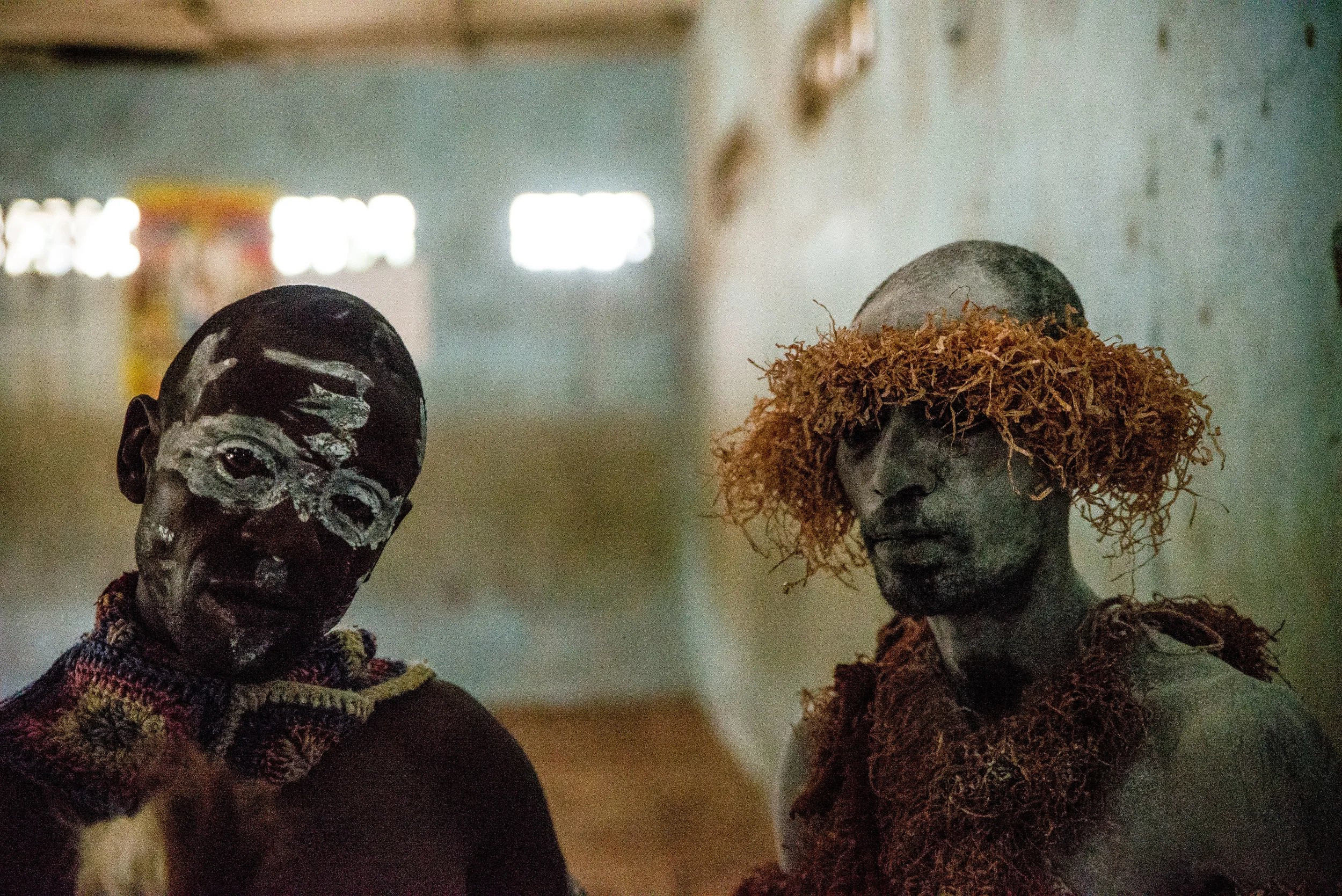
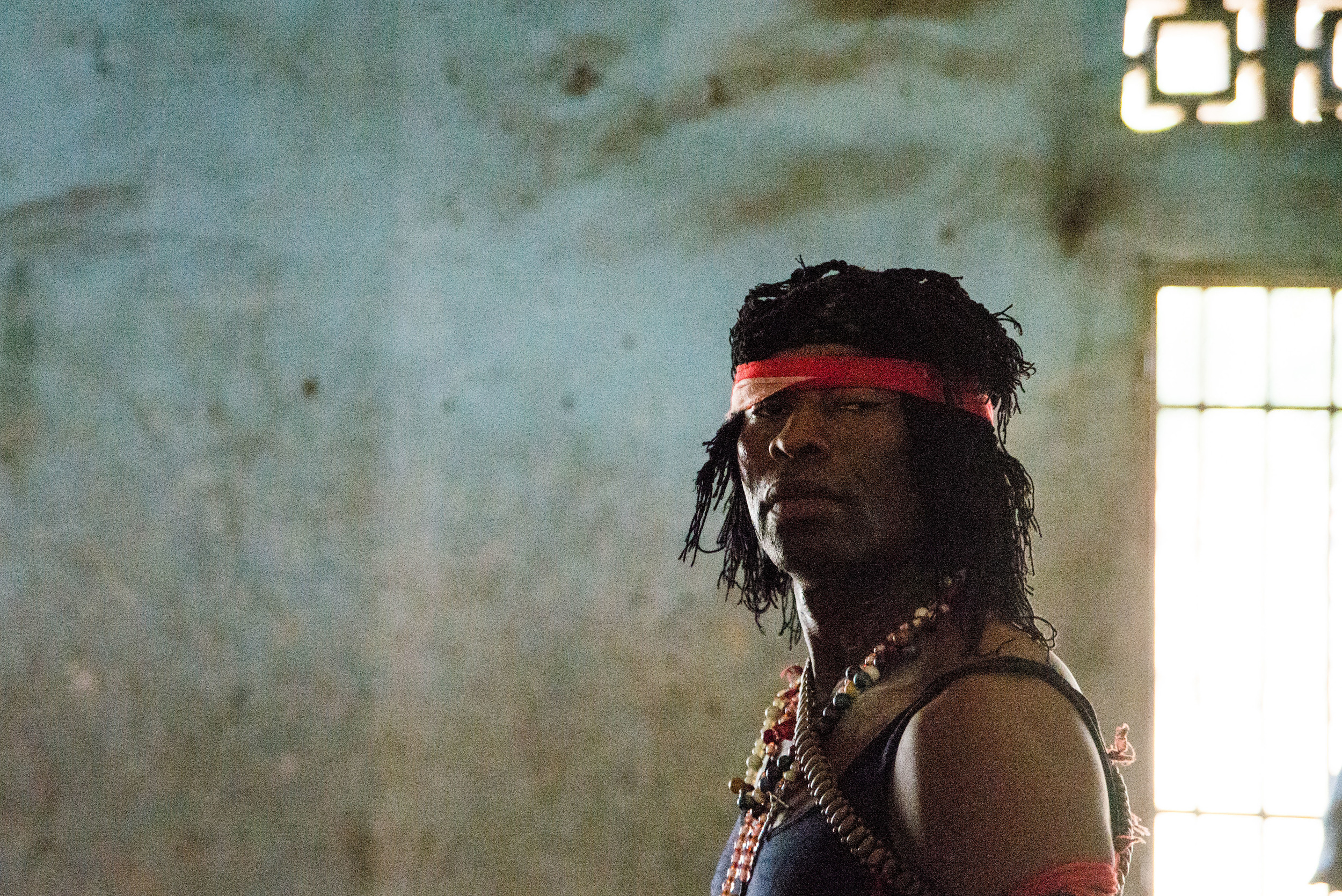
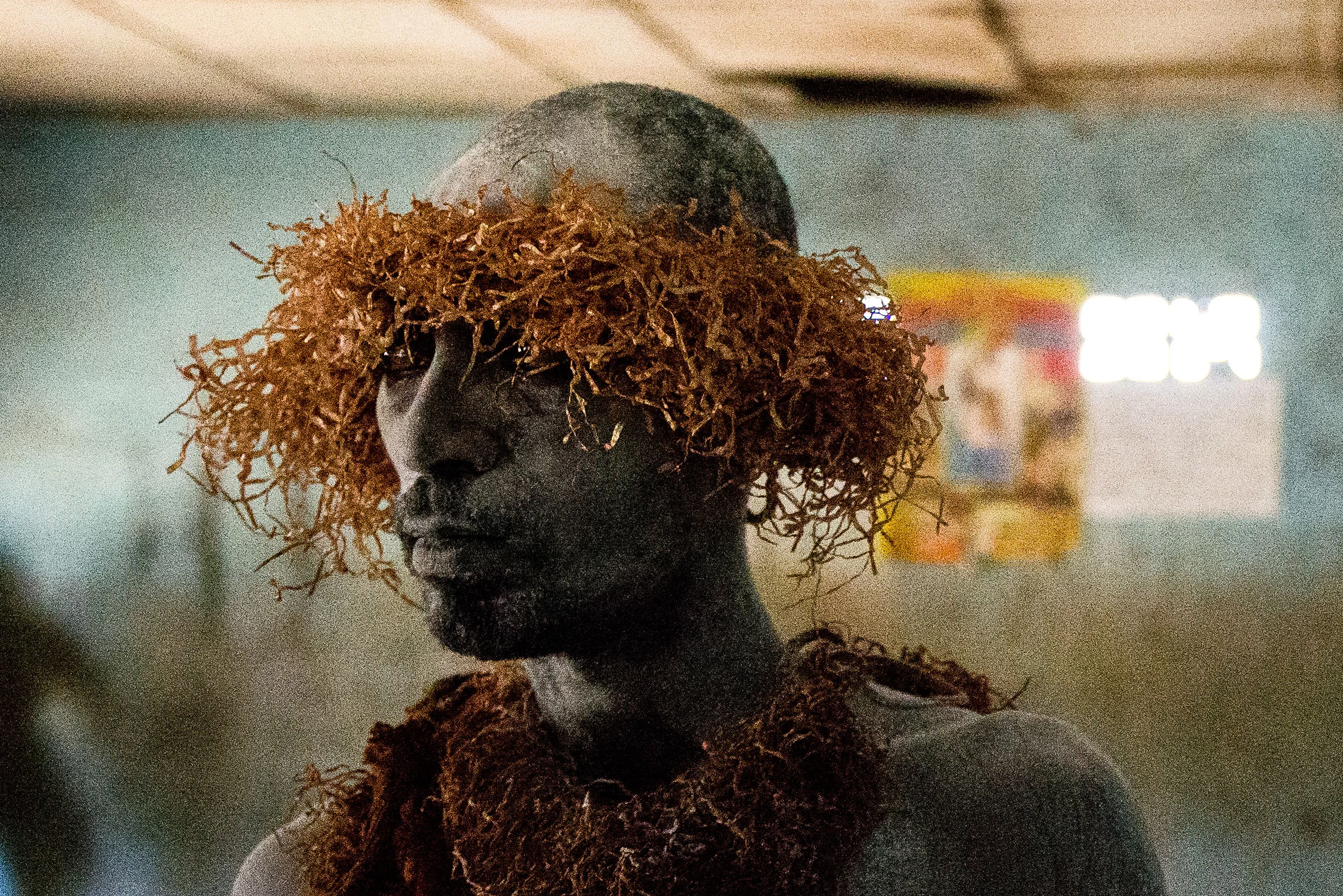
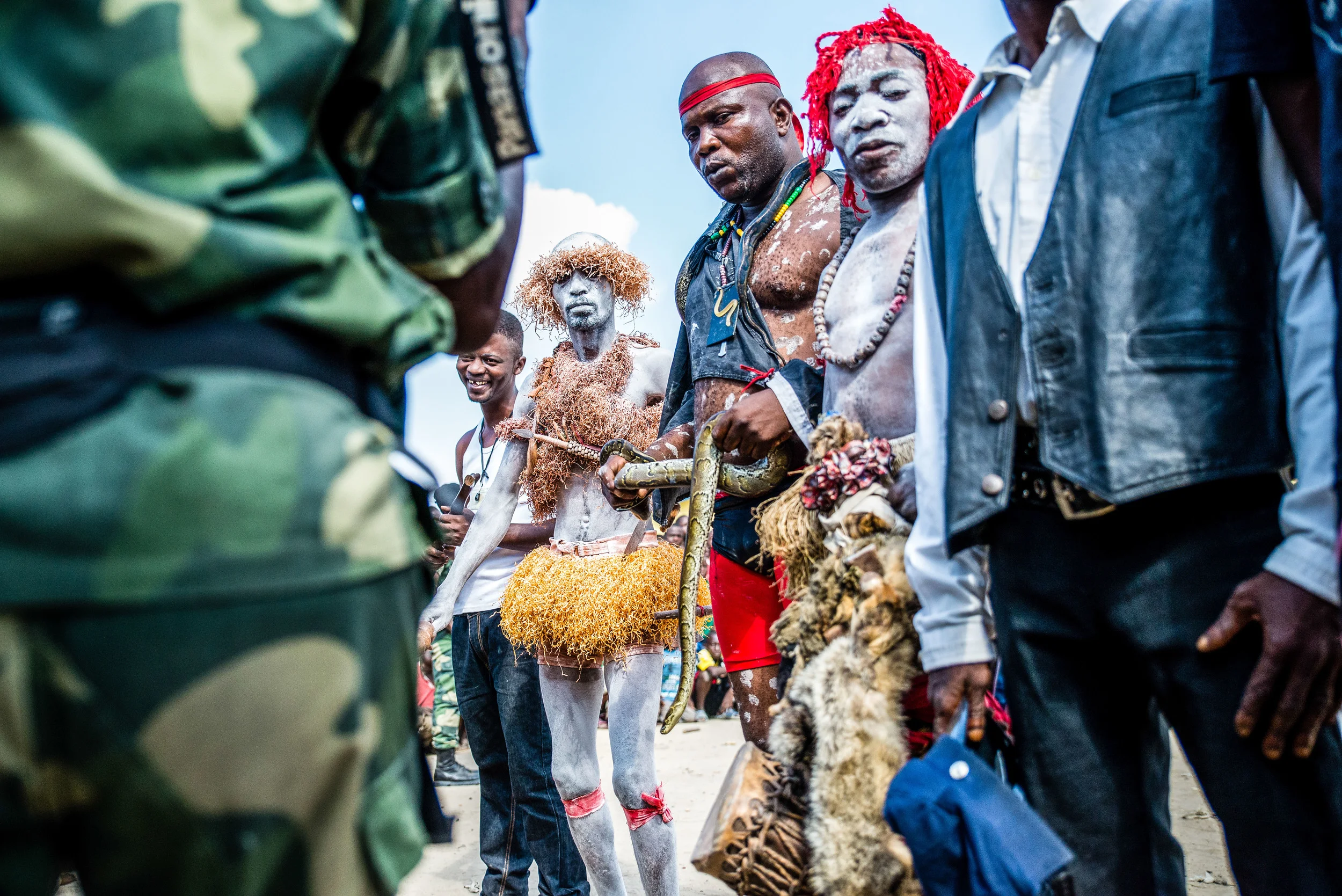
Walking from bright sunshine past haphazardly uniformed lounging soldiers, into the dingy changing room, the muzzling stench of cindering damp leaves catches in the throat. In the gloomy hall, no catcheurs pump iron, or do circuits, or stretch in preparation. Several bundles of rags and twigs sit on the floor, rattles shaken over them. Further in, whited-up witch doctors, stand with vacant gazes over candles: not celebratory talcum powder, but the uniform of ceremony. The fetisheurs perform rites. They are preparing themselves and the fighters for battle.
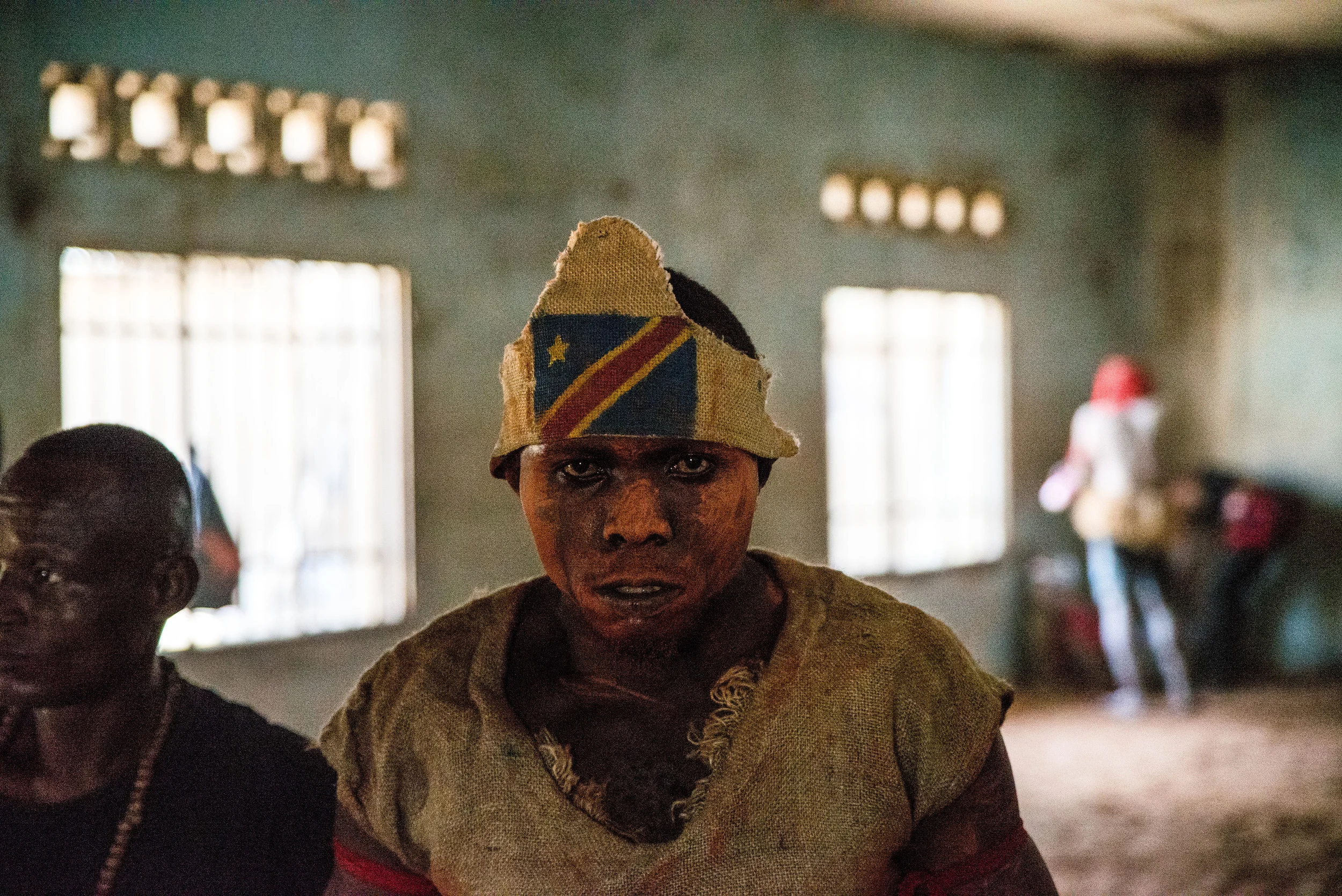
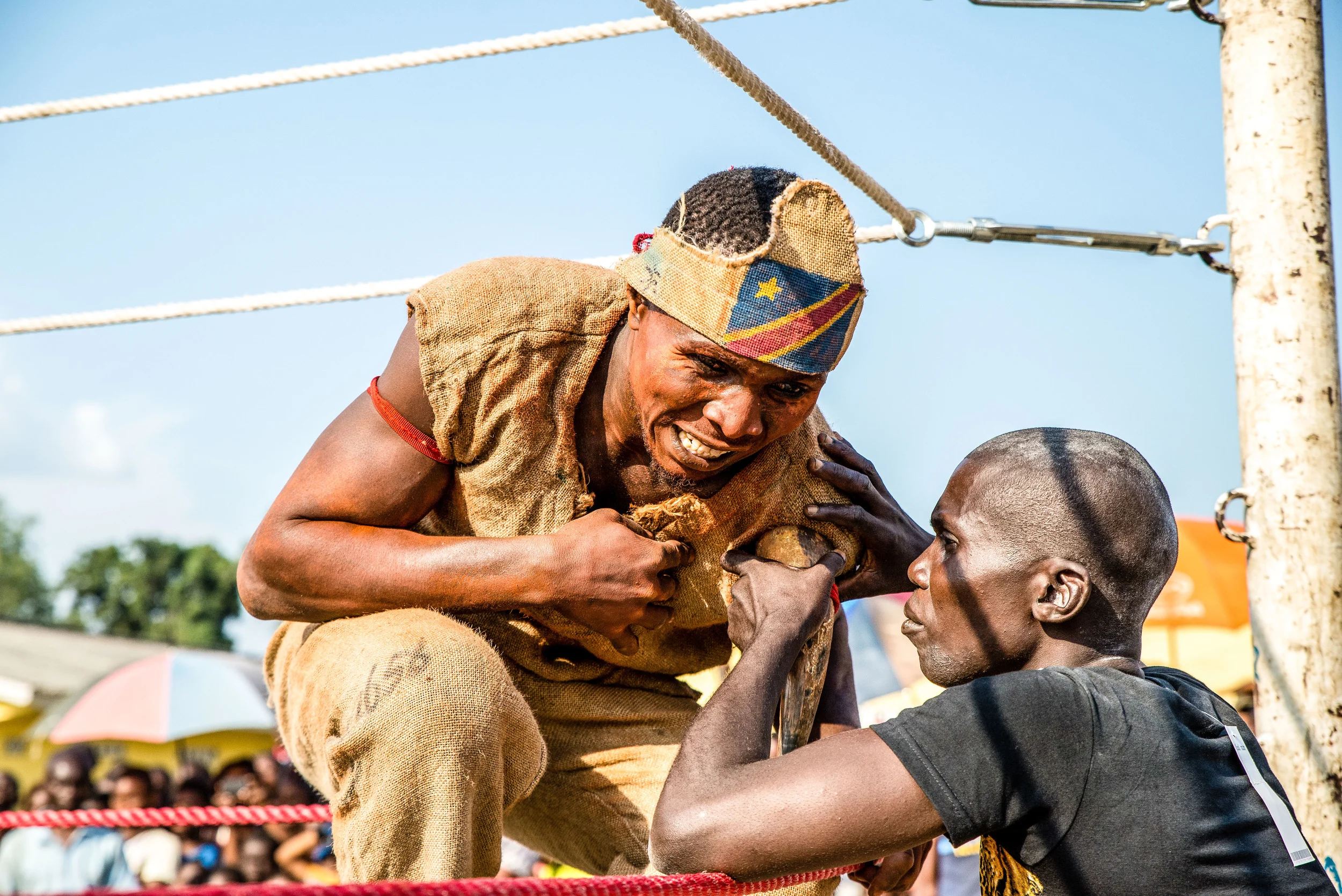
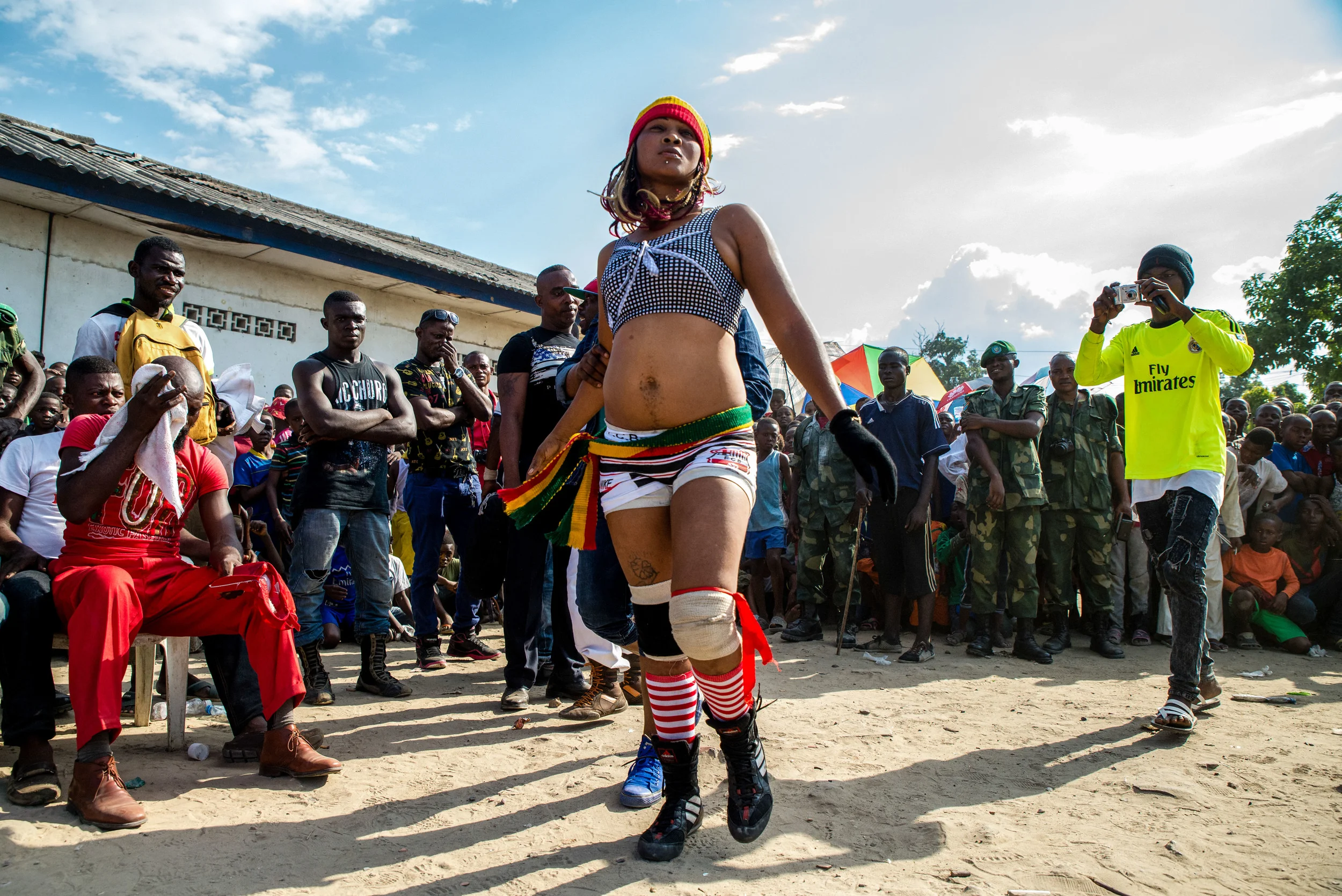
Symbolism and ritual abound. RDC, the Police catcheur has adopted his nation’s name and the colours of its flag. Shakira uses female charm to overcome her adversaries and uses the hip-shaking South American musician’s sobriquet. Not all catcheurs use the same magic. “I am a technicien so I didn’t do the ritual that the fetisheurs fighters do. There is a lot of magic.” Wingi reiterates.
All catcheurs undergo an initiation ceremony. Ten red candles are placed in a circle and the novice stands in the middle flanked on each side by a white candle and surrounded by more senior fighters. Wingi says he was reduced to tears as he felt a presence move through his body. Regular physical drills followed and Wingi learned the holds and throws. Wrestlers who will later use magic receive different training.
“They sleep for three nights in a cemetery,” Wingi explains. The aspiring fetisheur-wrestlers needn’t also spend the days there - even magicians must earn a living. They go to the cemetery in the evening and sleep there until morning and are free to get by in Kinshasa’s informal economies during the day. “This is how the spirits enter their bodies.” For their own ceremony, these graduans must find two white chickens, cut off their heads and drink the blood. As the listless referees know, the powers these magicians acquire can be very strong.
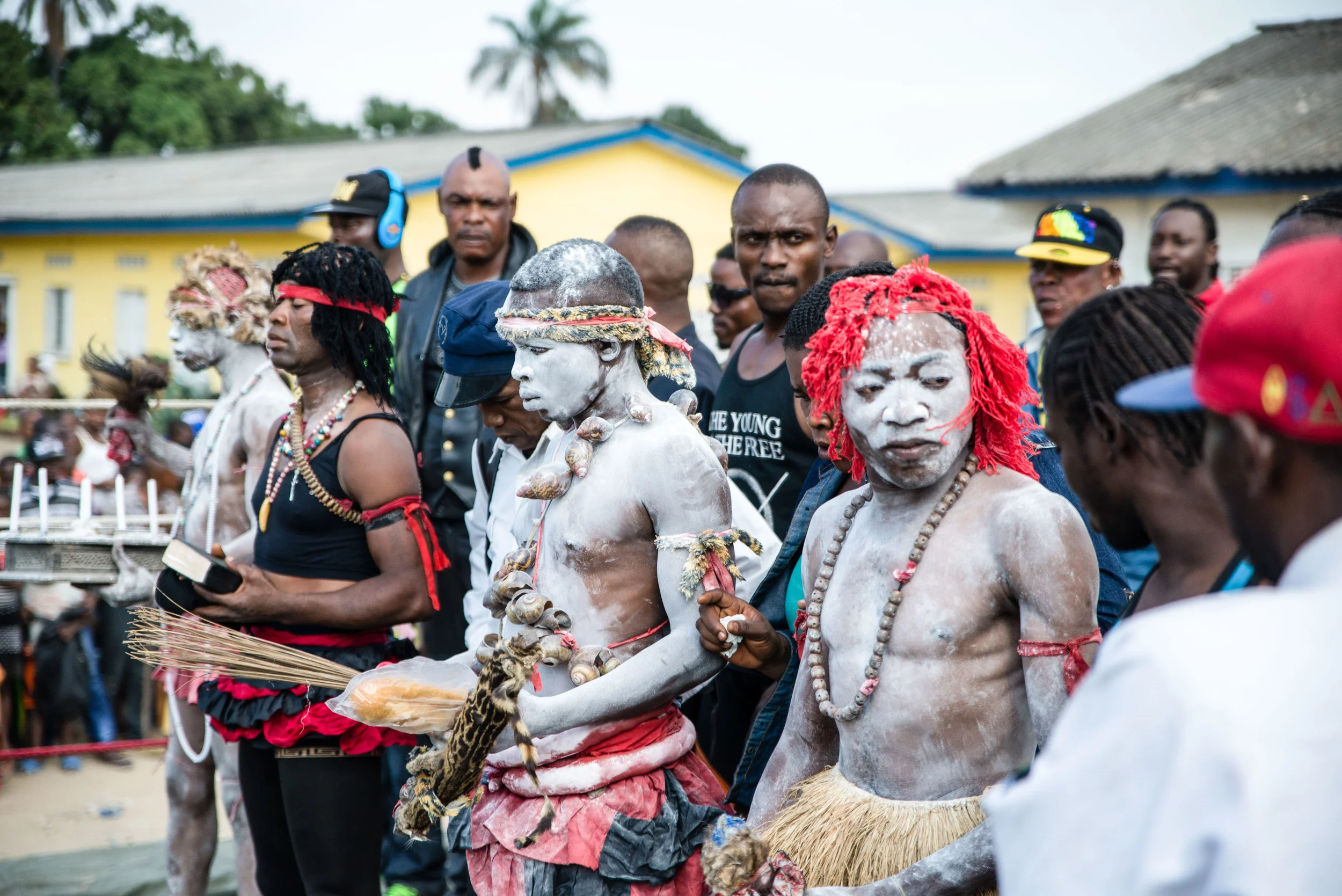
“Spit on the floor three times,” Huit Kilos commands before allowing the shutter to click at him, “this will protect the effect of the magic from the camera.” Hinted at by the wrestlers’ magnificent noms-de-guerre, form and symbolism matter to this game. For the photograph of the red-wigged fetisheur, a contribution is required. Zombi points next to the candles. A symbolic 200 franc note (perhaps 10p) is enough. It flops, discardedly jettisoned, onto curling banana leaves by the wizard’s feet.
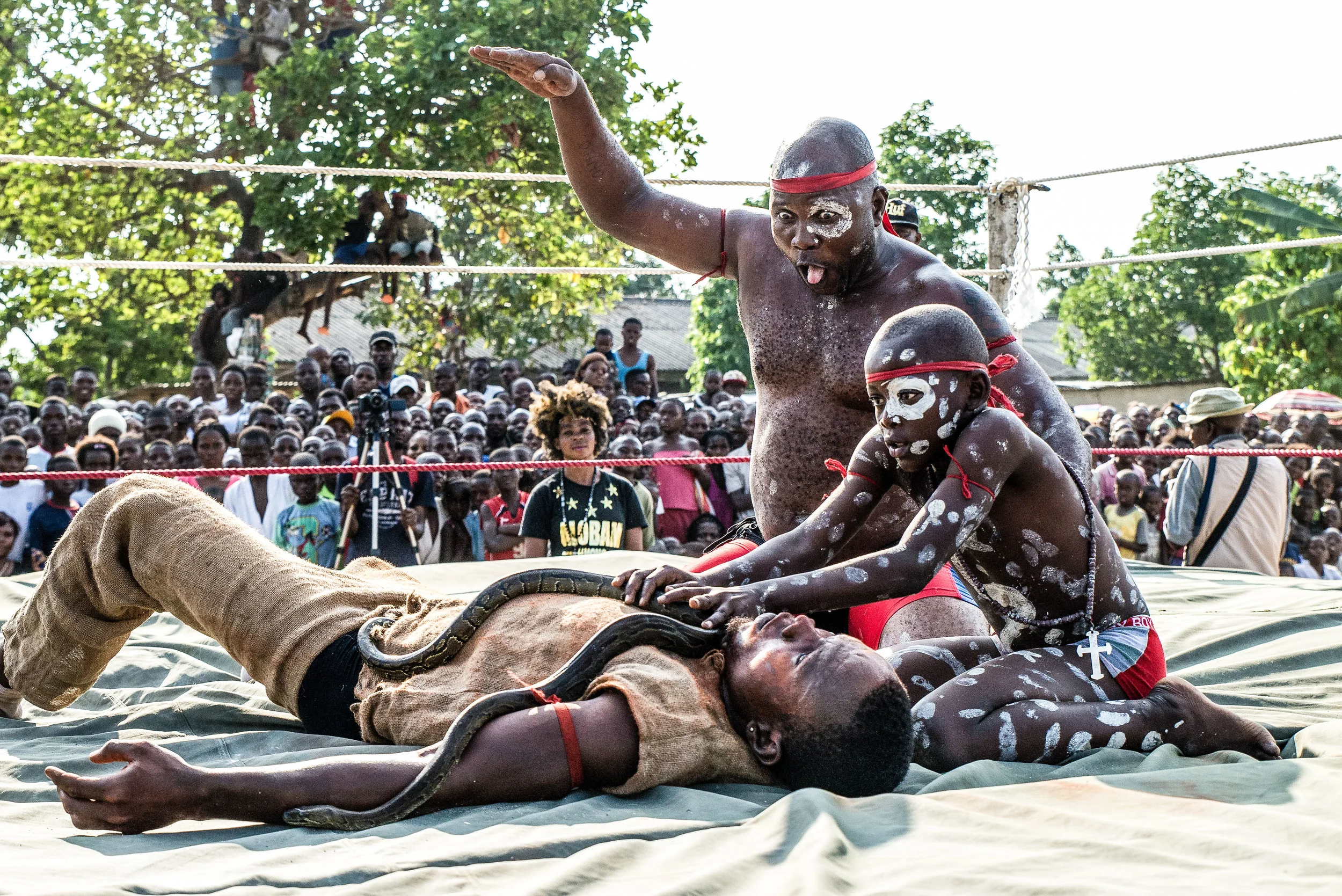
Outside, guests of honour sit caesar-like in snug, starched uniforms poised on logo’d plastic beer chairs under faded plastic awnings swigging from sweating brown bottles. In a military camp, one expects ceremony. Preparing to take to the ring, six catcheurs and fetisheurs parade before the police and army top-brass. Men in face and body paint dressed in lycra and sackcloth; fetisheurs draped in amulets, armed with bibles; a female wrestler, one child and two snakes salute their superiors.

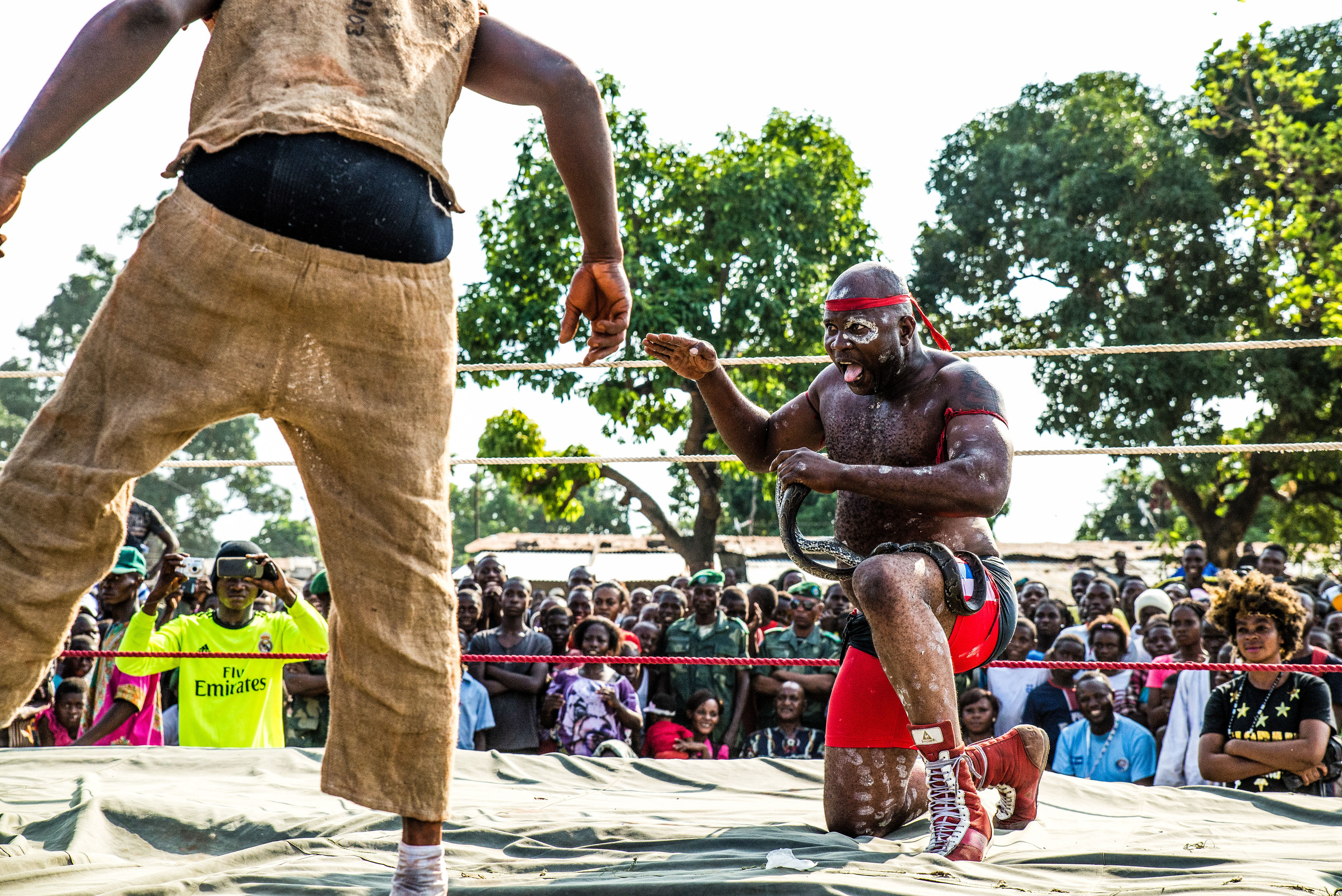
Bosses nod approval and shake hands with favourites. Disciplined military families look on with practiced boredom, and the band gives inward excitement outward flamboyance; relieving any pressure on spectators to smile. Yet the thrill lurks barely below the surface. In the presence of magic gymnasts, solemn delight flutters easily up to whooped applause.
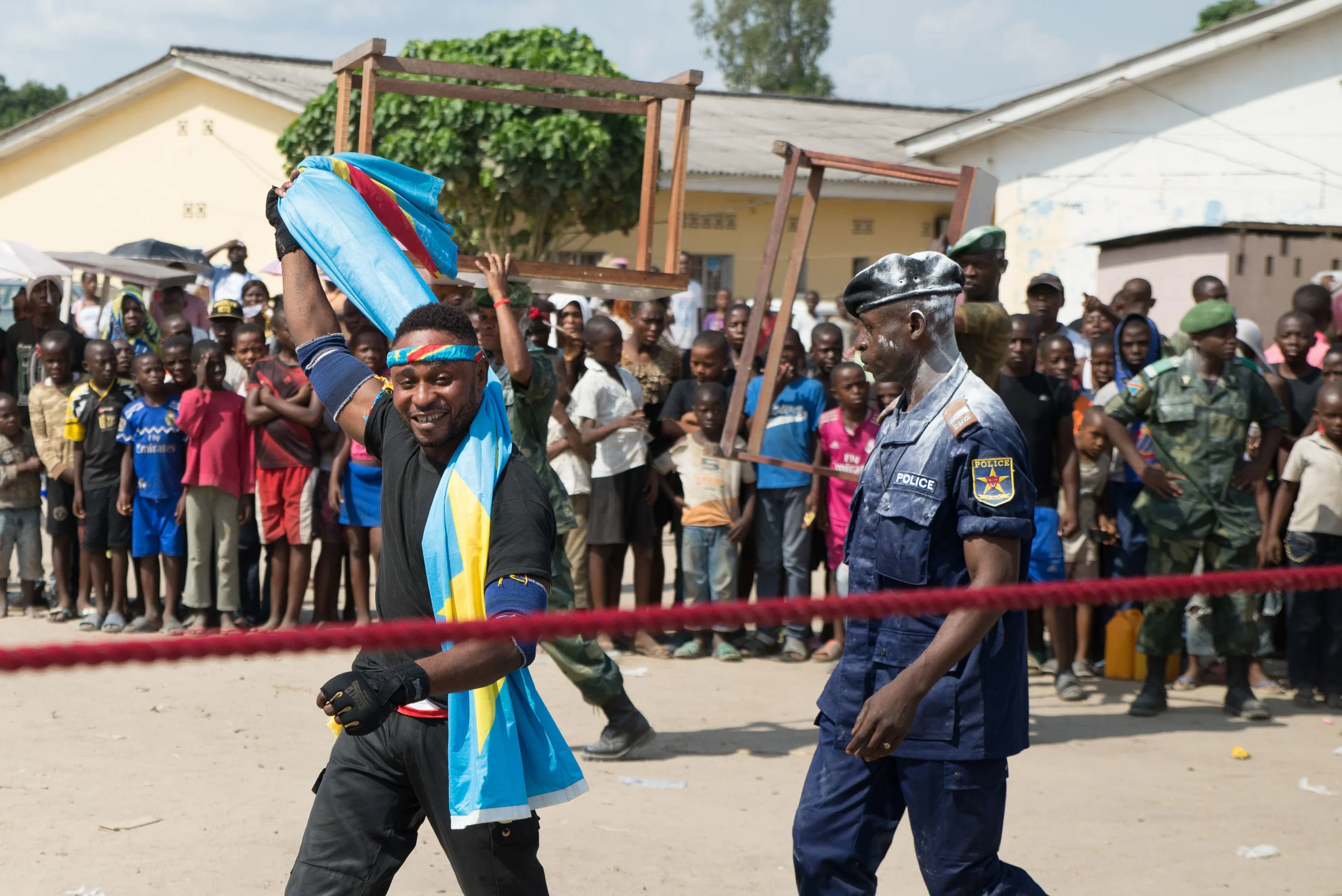
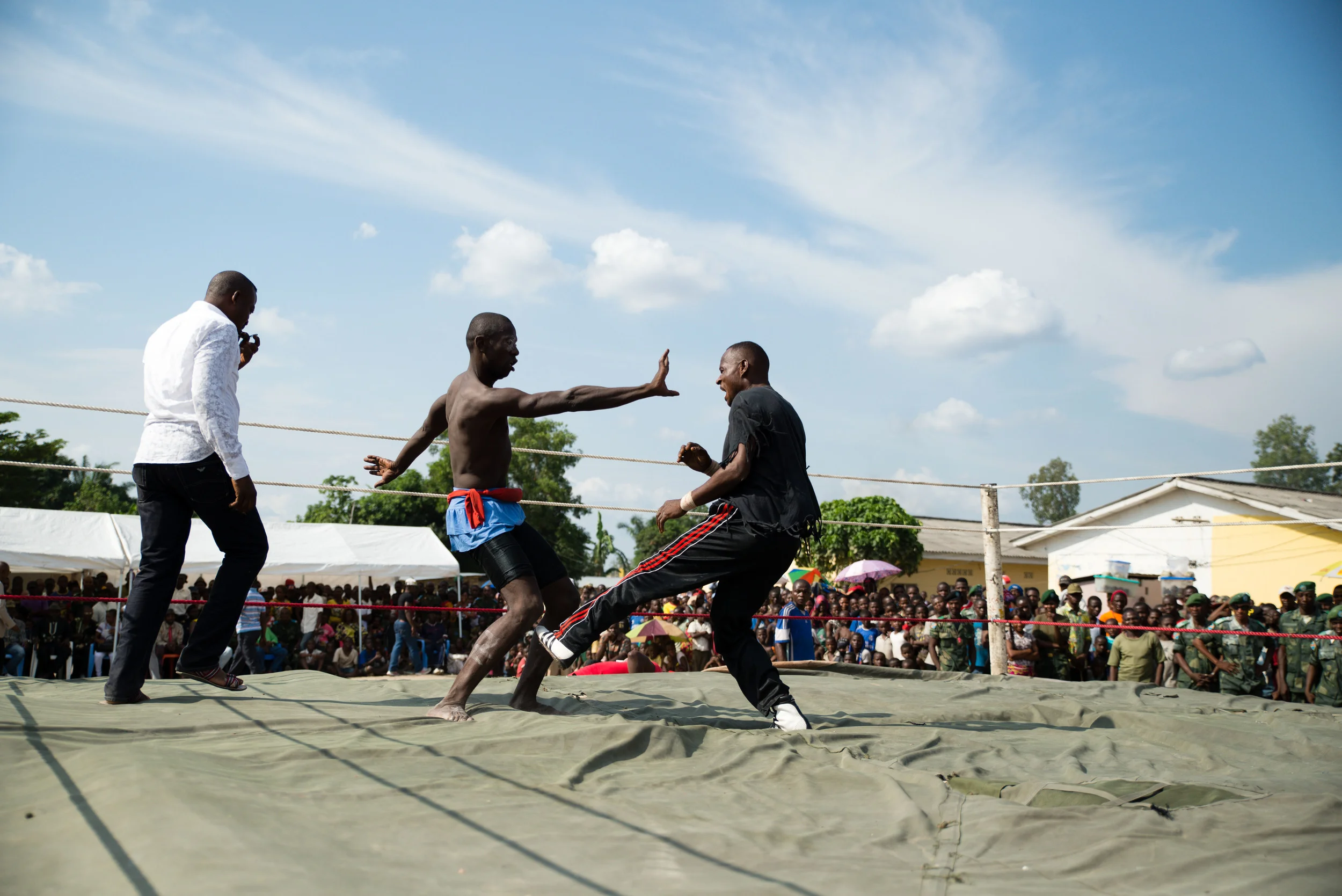
In Catch, wrestling techniques are interspersed with magic that sends opponents sprawling in a corner or staggering in a malleable muddle. Fighters dance as the band beats enthusiastic time. Pantomime cries locating adversaries echo around the square amid suspended gasps of disbelief and awkward laughter provoked by sleight of hand conjury or coordinated play-acting. Or is it magic? Shakira is a powerful woman. Anakonda is young and maybe his spells are not so strong yet. Or he needs to concentrate on specifics and practice.
Shakira means business with her signature spell. Mock-flashed Shakira’s breasts, Anakonda stumbles in a giddy “knock me down with a feather” dwam. The young would-be soldier slowly rocks her competitor to her chest; backwards and forwards; this way and that; hypnotically, prophetically swaying. The volume of trumpet and drums rises steadily. “When the bough breaks,” she leaves Anakonda to fall. Barely muffled hysteria from the gathering. The referee counts.
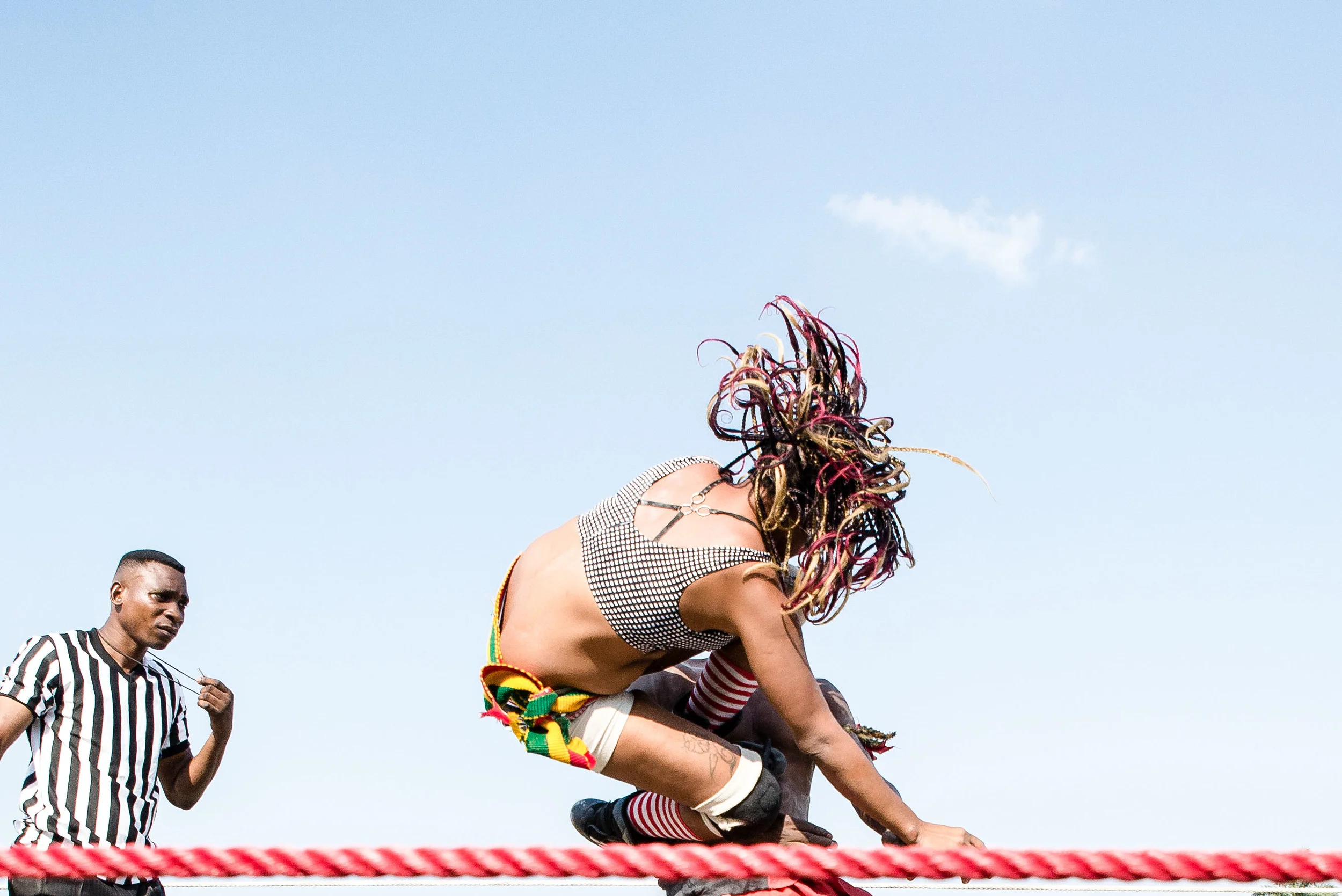
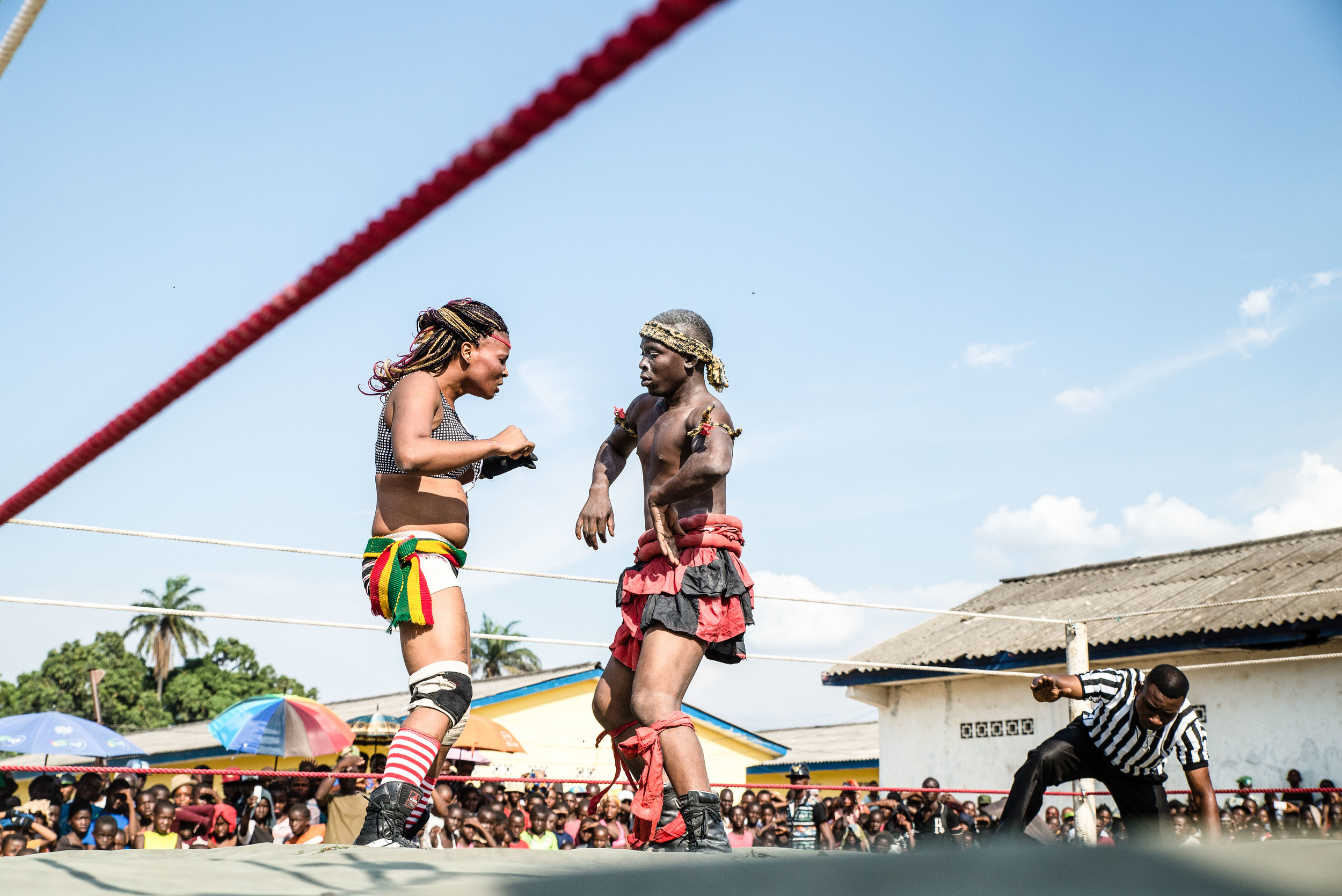
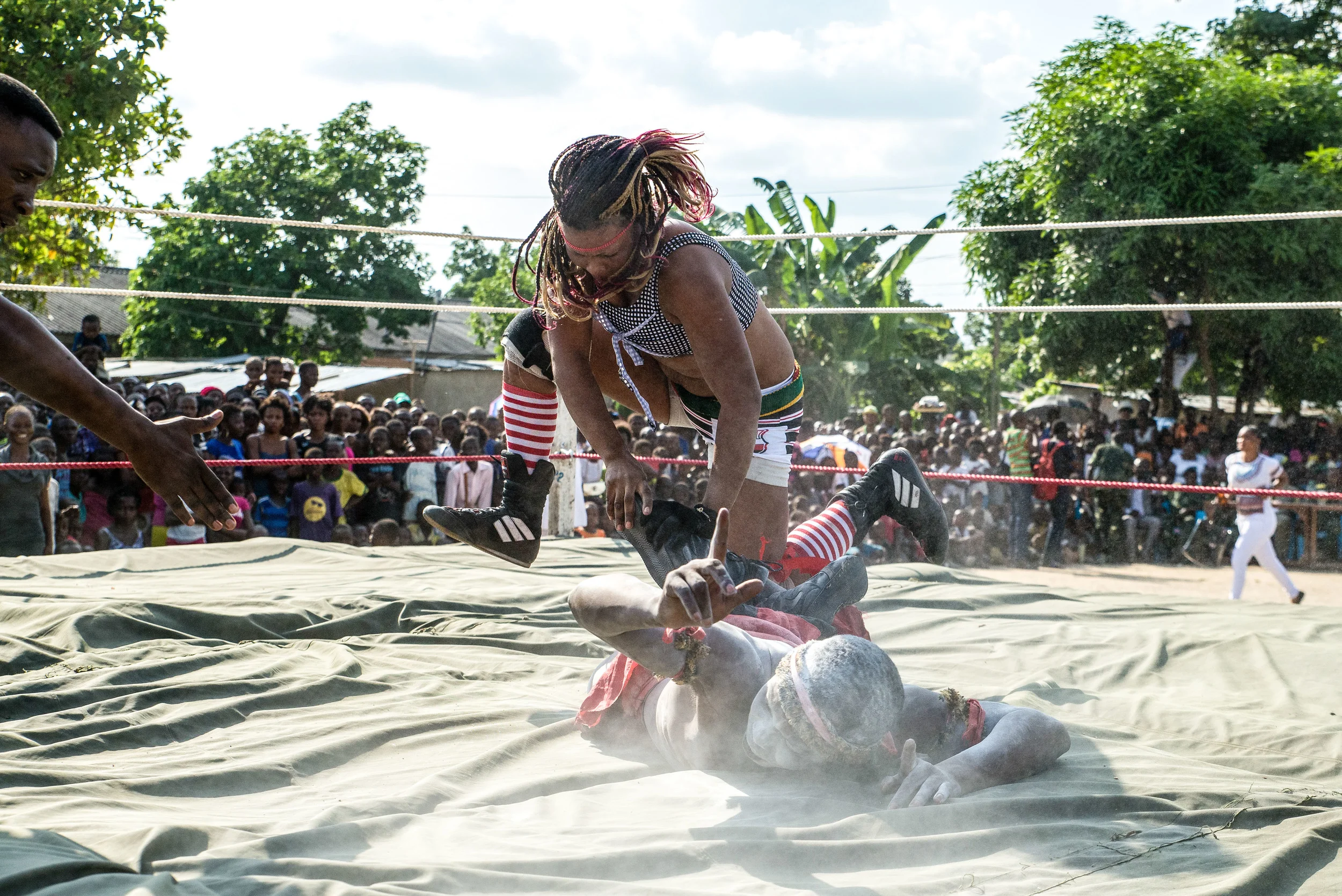
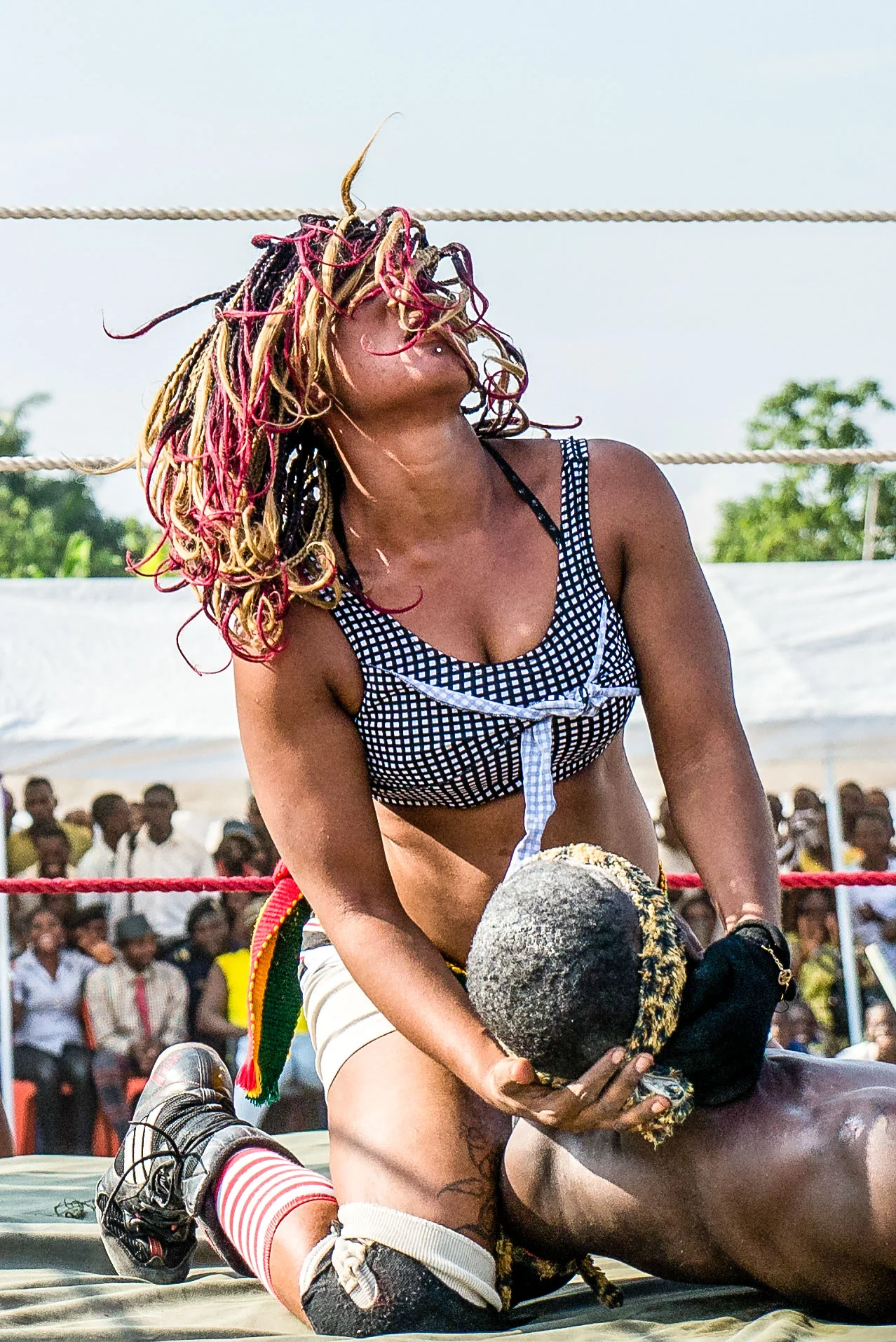
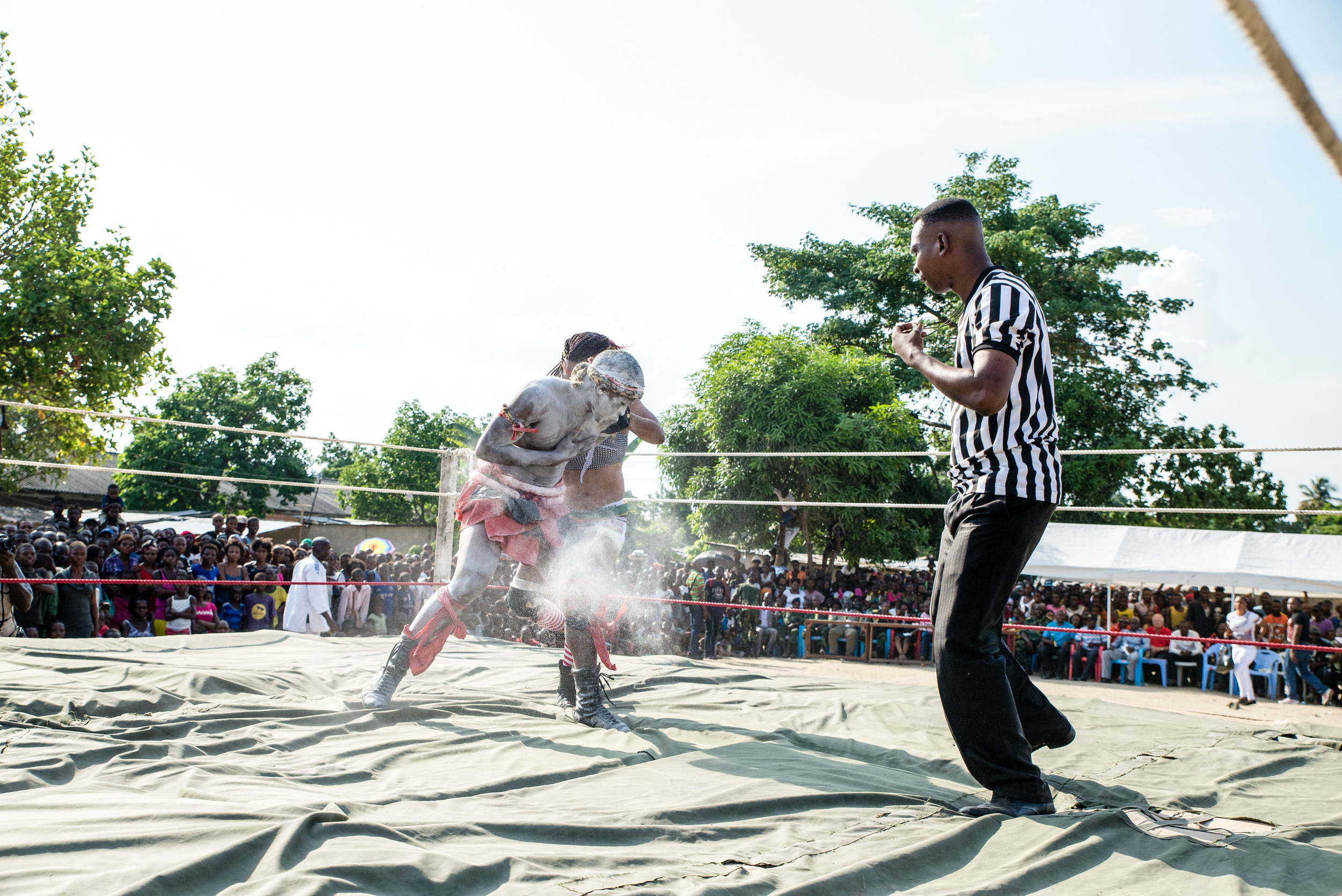
“Zonga”. “Back!”. A powdered corporal pushes an enthusiastic child back into the surging throng behind the inferred line he is halfheartedly maintaining with his back turned. Unfurrowing his brow, he turns to the ring where Anakonda’s leopard-skin headdress has overcome the siren’s holds. The tables are turned: Shakira stumbles in a daze. Unassailable warrior-cum-puppet master, Anakonda dances the aspiring officer and gestures to the fans: what should be Shakira’s fate? In this brief moment of distraction - the dangers of crowd-sourcing - Shakira’s coach, FBI, swoops in for the bust. Anakonda is left sprawling on the mat. Flutters of dismay morph through shock to awe at the dastardly-dogged determination and deserved success.
Wingi is more excited about the next fight between spandex-sporting giants. Sans Pake (of the army) and Colonel Dragila (of the police) are very tall techniciens.
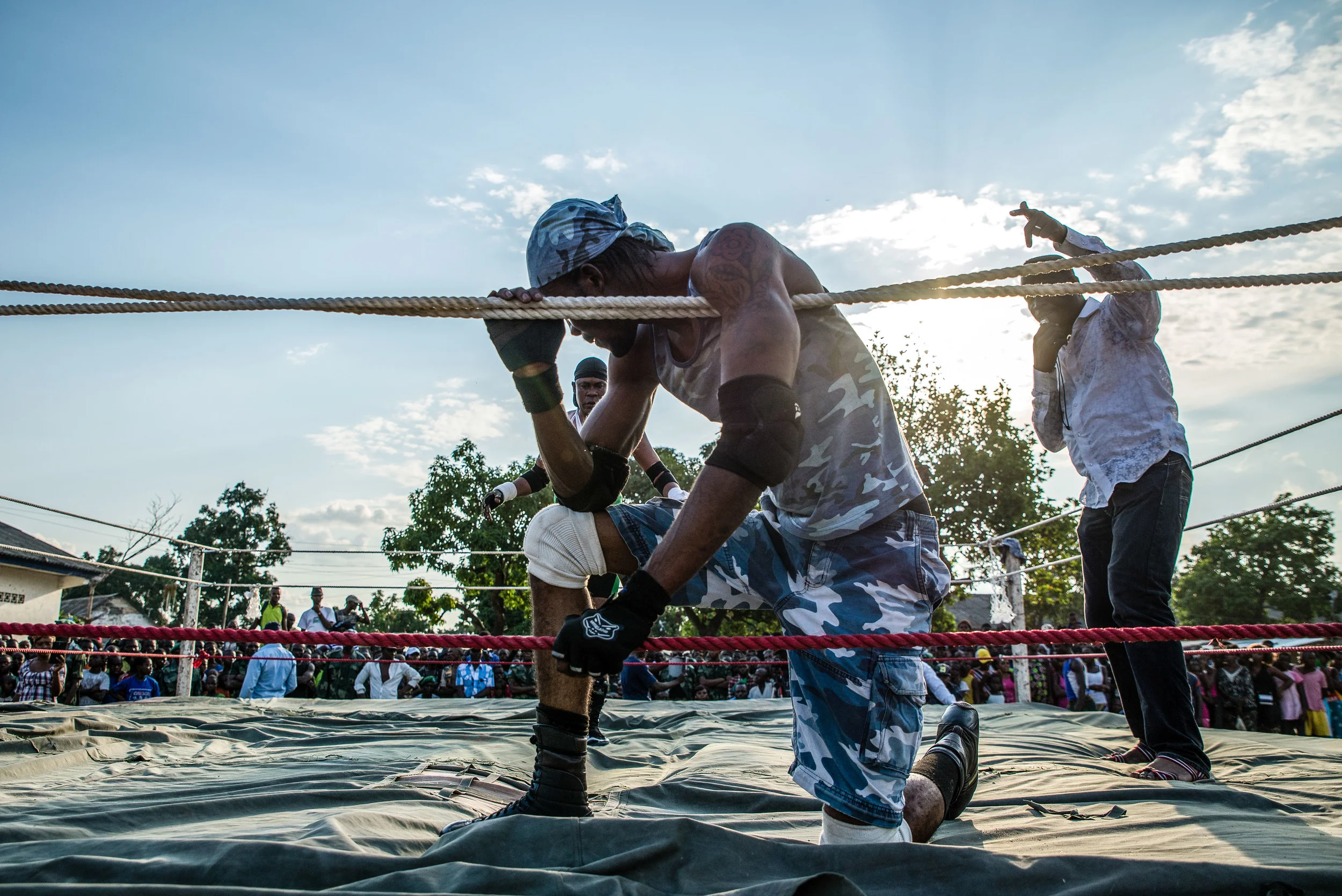
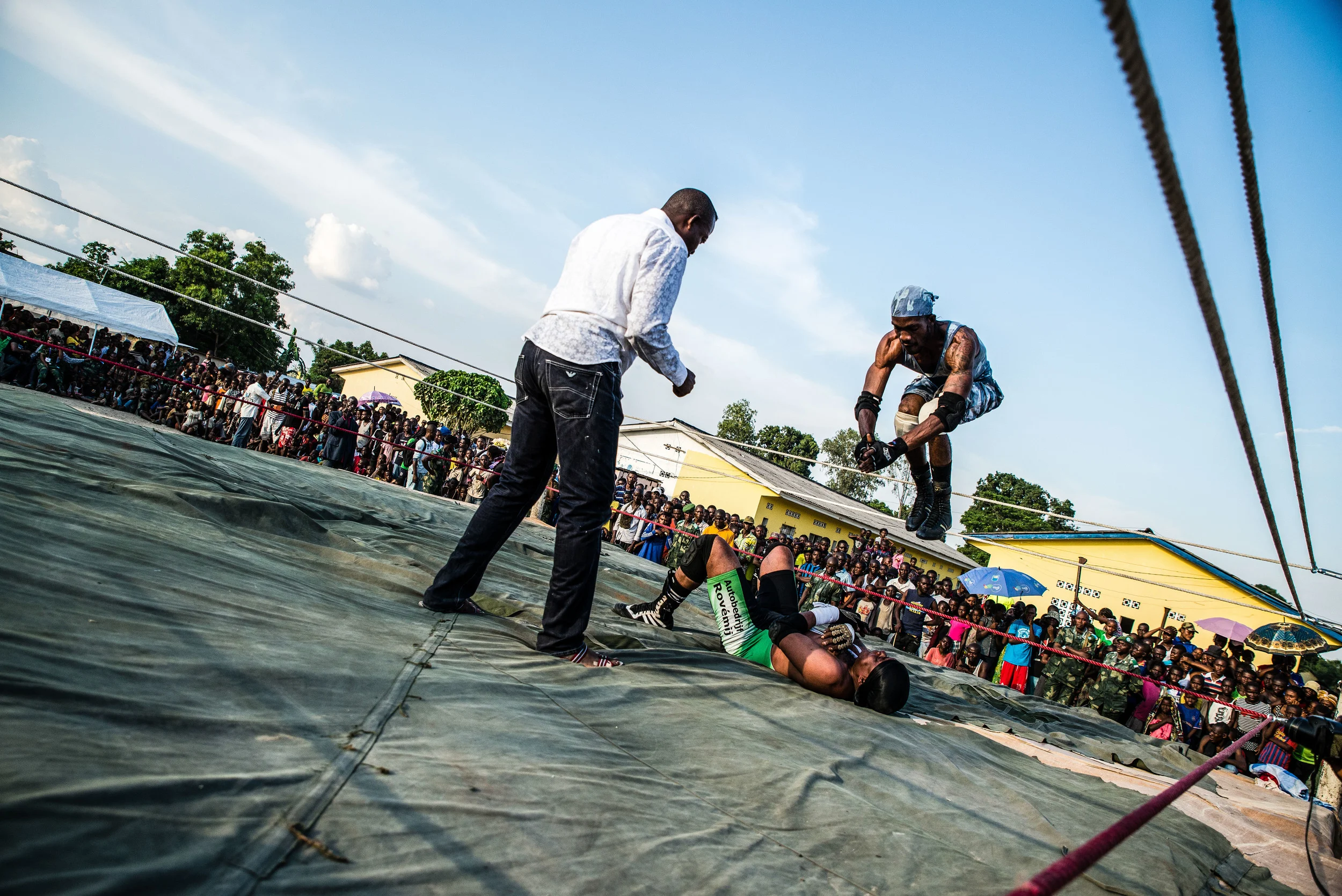
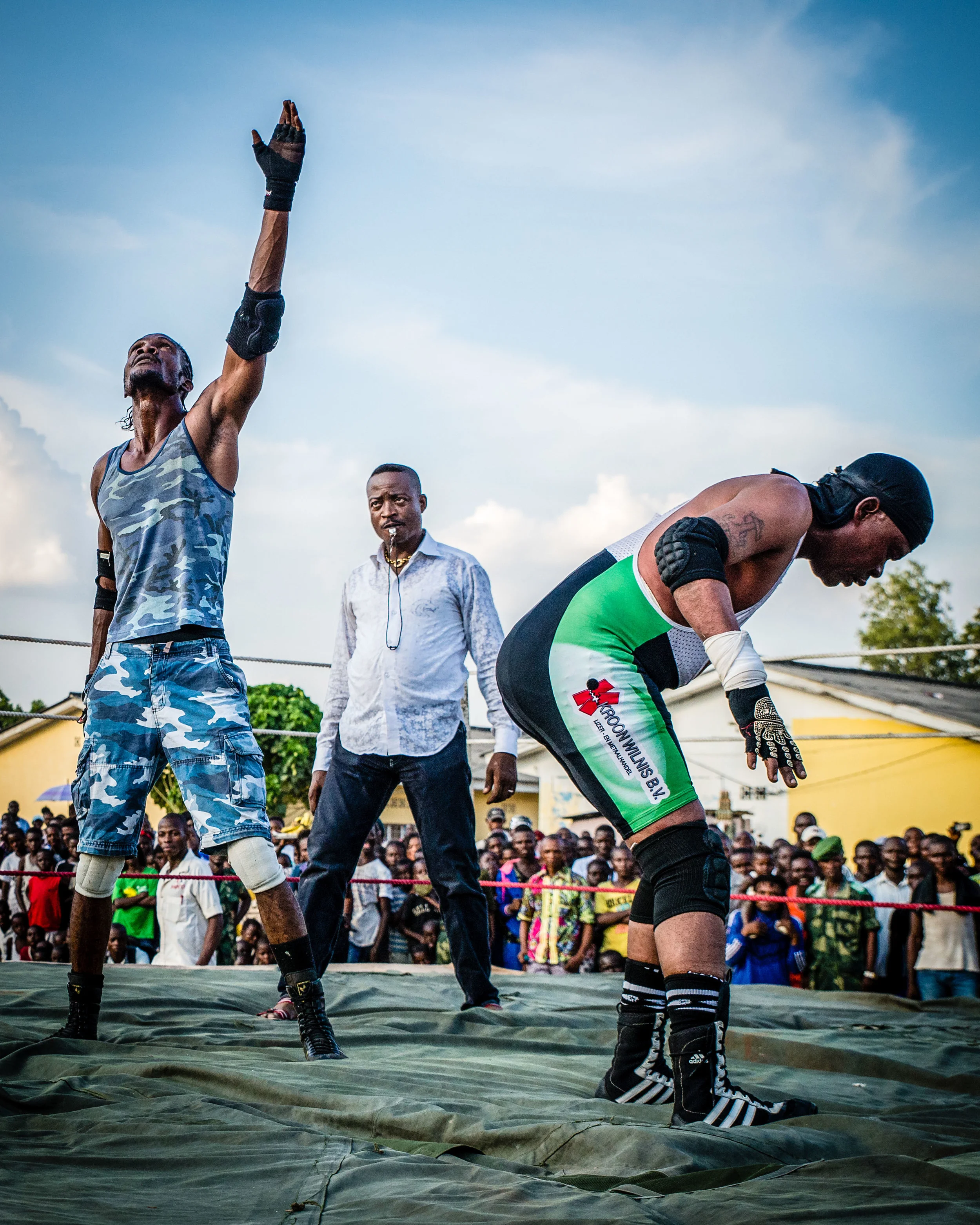
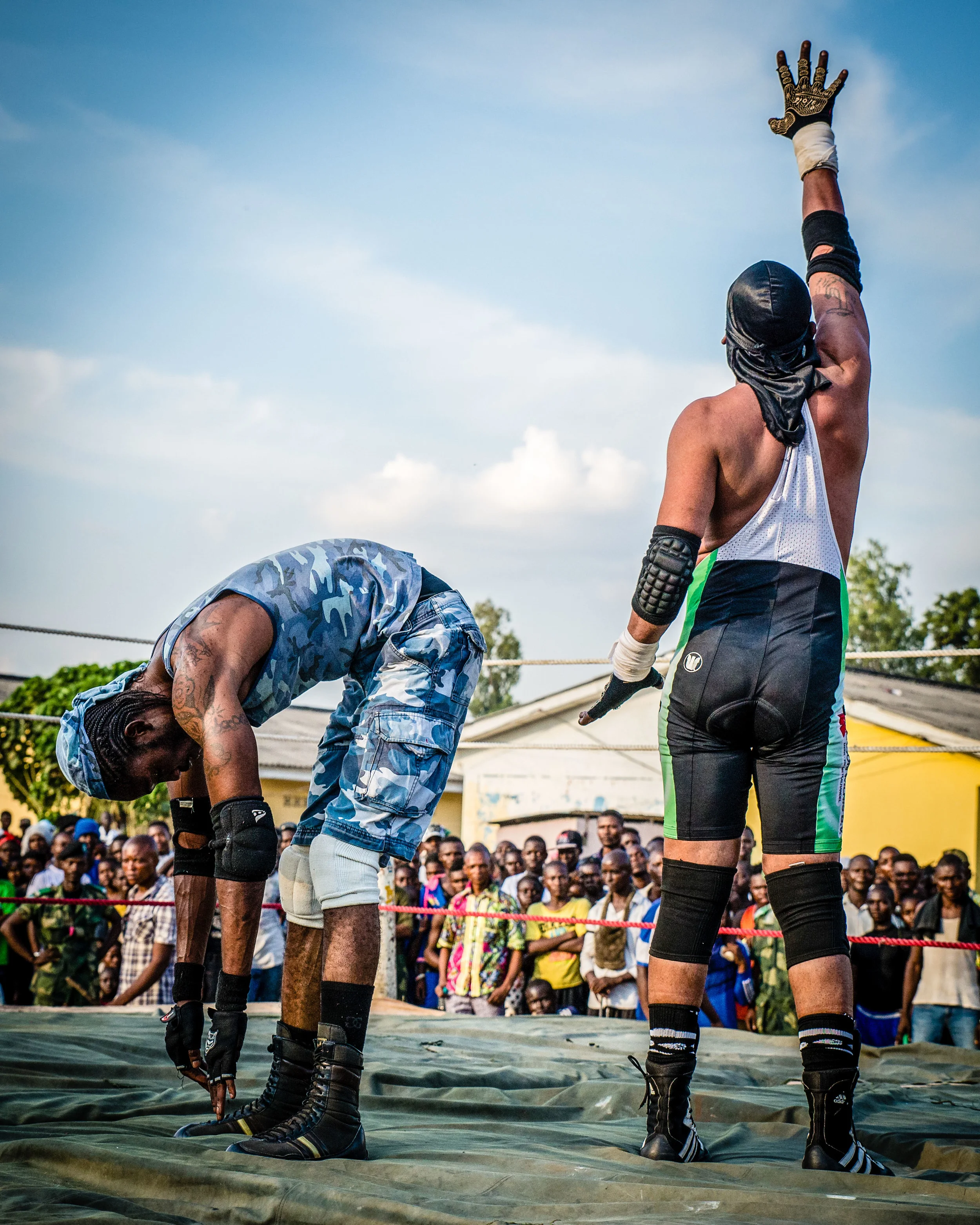
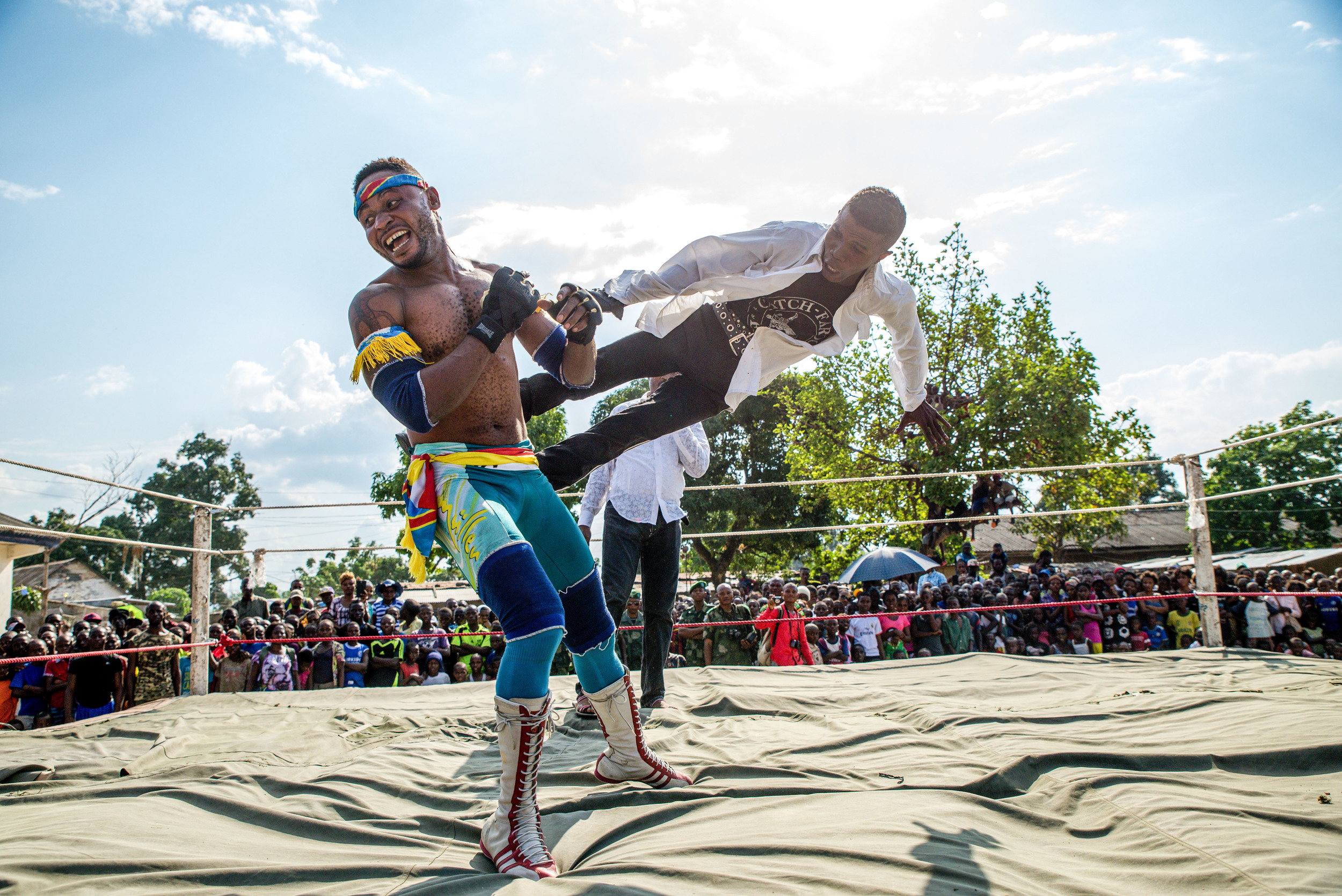
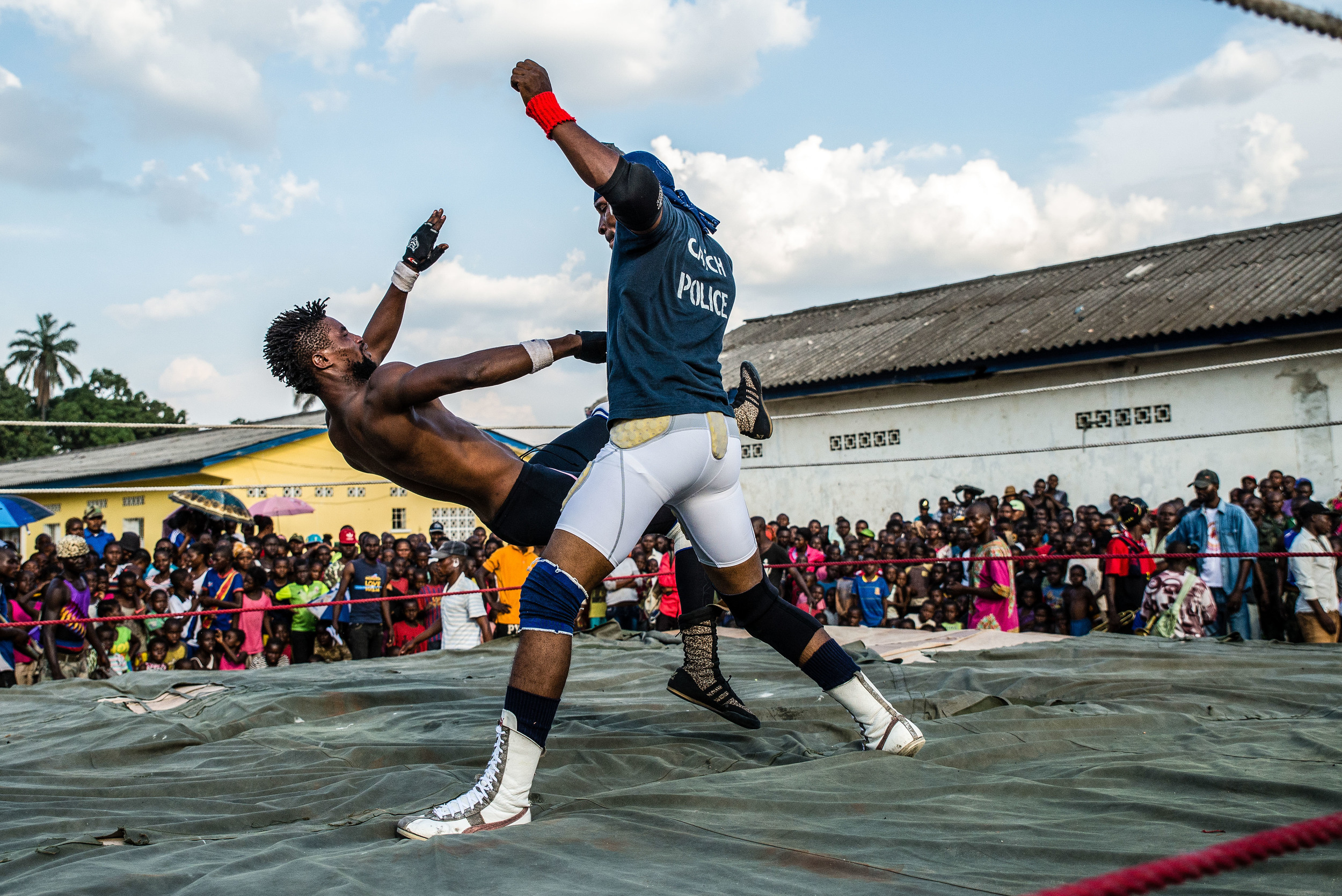
In the final, Bebe Riko of the police is up against Super Edingwe of the army: a manically impish, rotund smile in a pink tutu against a behemoth in lycra. This is a no holds barred treat and kids are transfixed. Ignored, the corporal’s defensive line is breached by several chancers until a helpful policeman re-imposes order with a big stick. Kids scramble out of no mans land taking cover peering from behind adults' legs.
Bebe Riko flashes the crowd an empty box: “Nothing in there,” he assures all. Closing the box, he does a dance - hips gyrate and the music gets louder. Starry-eyed children ignore Kinshasa’s special branch and slip closer towards the ring. Rising to a crescendo, with a flair, Bebe Riko pulls spaghetti from the empty box. Flashing teeth, he launches packeted pasta. Mouths drop open, incredulity gives way to awkward chuckles and heads shake. How could Super Edingwe counter that attack?
Murmurs rumble as necks crane and Super Edingwe produces a cooking pot and manioc powder. Bebe Riko shrinks, dismayed. Strutting to the centre of the stage, the reigning champion squats by the pot and feigns cooking foufou. Spaghetti was plausible perhaps but how well could a man really cook foufou? A lady assistant is at hand to inspect and ultimately gives her approval. Confused faces relax: they have once more caught up with the game. The Congolese manioc-based staple affectionately referred to as “la boule nationale” is a clear winner.
Children’s faces - magic-thoughts whirring away, brightening eyes and stretching pupils - are upturned as the champion Super Edingwe is congratulated by the officers and jogs a lap of honour. Competitors’ sweaty faces and torsos ooze colourful smudges. And the trumpeter’s cheeks are sore. Magic has once more brightened a dusty Saturday in Kinshasa.